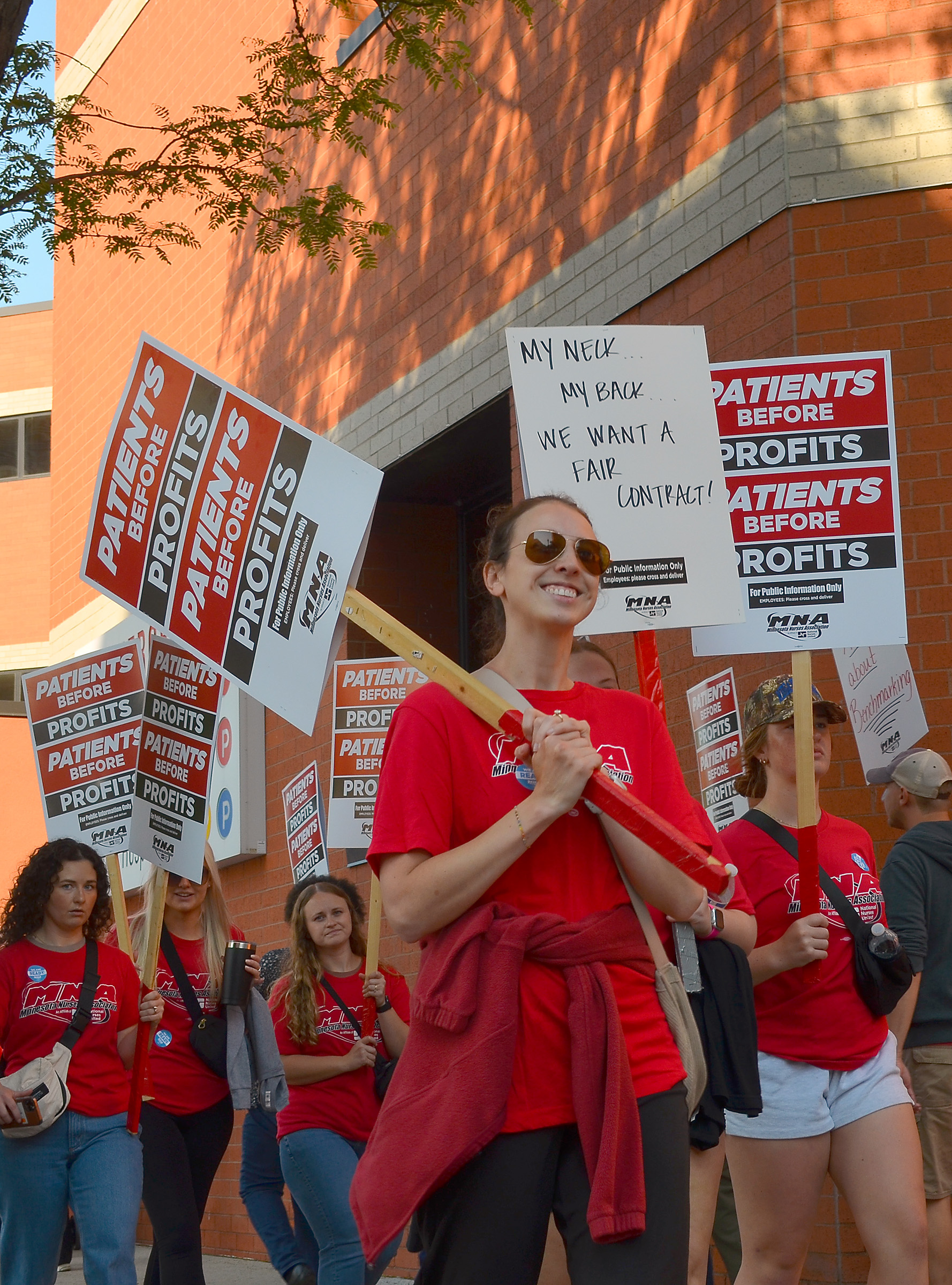
Nurses picket outside United and Children’s hospitals in St. Paul during their 2025 contract campaign.
Members of the Minnesota Nurses Association who work at 11 hospitals in the Twin Cities area voted this month to ratify new union contracts that will provide some stability as health systems navigate historic federal funding cuts in President Donald Trump’s tax-cut bill.
Metro nurses settled with their hospitals after a marathon bargaining session that ended July 3, as Republicans in Congress were falling in line behind a bill expected to slash over $1 trillion from Medicaid and the Children’s Health Insurance Program, both critical sources of revenue for hospitals.
The timing was no coincidence, according to Fairview Southdale nurse Rachel Andersen, a member of her bargaining unit’s negotiations team and vice president of National Nurses United.
“When we found out that awful bill was passed, it was like the rug was pulled from under us,” she said. “We had to pivot, to figure out where do we go from here and what’s in our nurses’ best interests.”
Still, the contracts include several gains for metro nurses, including 10% raises over the next three years, new tools to address workplace violence and requirements that hospitals provide coverage for nurses when they go on breaks, which will become mandatory under a new state law.
Beginning Jan. 1, employers must allow employees scheduled for six or more consecutive hours a break of at least 30 minutes. Currently, employees working eight or more consecutive hours must be permitted”sufficient time to eat a meal.”
It’s not the strict staffing minimums that MNA members have been lobbying for over the last two decades, but forcing hospitals to build break nurses into their staffing will help address burnout, Andersen said.
“It’s going to be such a relief because one of our biggest points of burnout is when we work 8-, 10-, 12-hour shifts but the hospital does not have any procedures for how we’re going to get our breaks,” she said. “In the ICU, I have to take four patients who are on life support to give my co-worker a break, and obviously that is not a safe situation. Then I have to find another nurse to do the same thing when it’s my turn.
“Now we’ll have nurses scheduled to come in and provide us with those breaks, so you can eat your lunch and rest and get off your feet.”
Nothing came easy for MNA members in this round of negotiations, but Andersen said union members’ willingness to show support for their bargaining team – at informational picketing June 4 and, later that month, in a strike-authorization vote – put pressure on the hospitals to compromise.
“It took eight or nine sessions for them to come to the table with the intent to productively bargain,” Andersen said. “After our informational picket, the next day we got more dates to bargain. After our strike vote, that was the first time they passed a meaningful economic package to us.”
MNA President Chris Rubesch said the union isn’t giving up on the fight for staffing minimums that ensure safe patient care. He noted that this was the first round of bargaining in which MNA members voted safe staffing as their No. 1 priority, over wages.
“We’ve been fighting an uphill battle,” he said. “The campaign may be over for now in the Metro, but the fight for safe staffing and patient care is far from over.”
This article appeared in The Union Advocate’s August 2025 issue.
– Michael Moore, Union Advocate editor
 Union Advocate