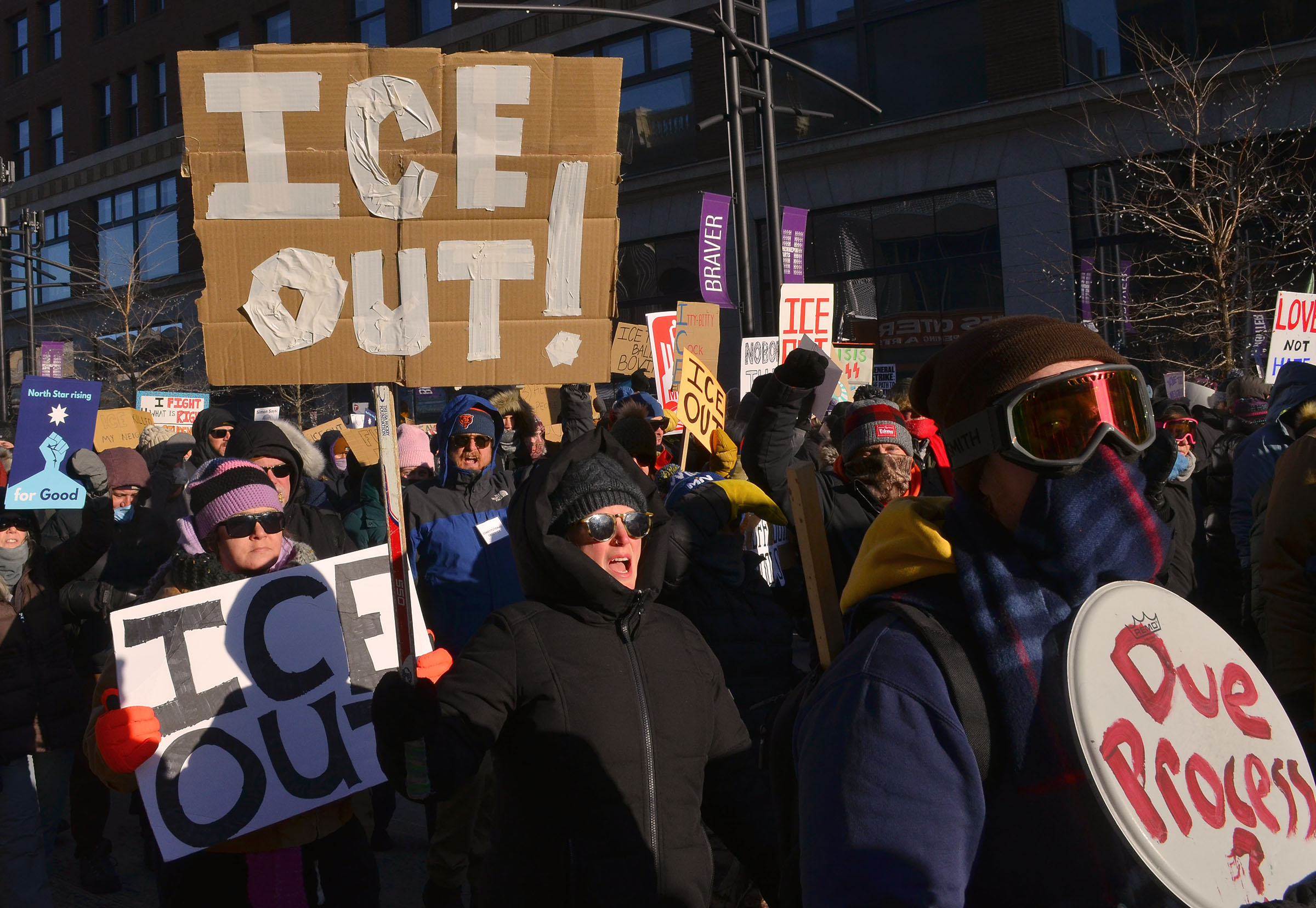
Thousands march through downtown Minneapolis during the labor-endorsed “Day of Truth and Freedom.”
Faith, labor and nonprofit groups behind the massive “ICE Out of MN” day of action Jan. 23 released polling today that suggests nearly a quarter of Minnesota voters participated in the protest.
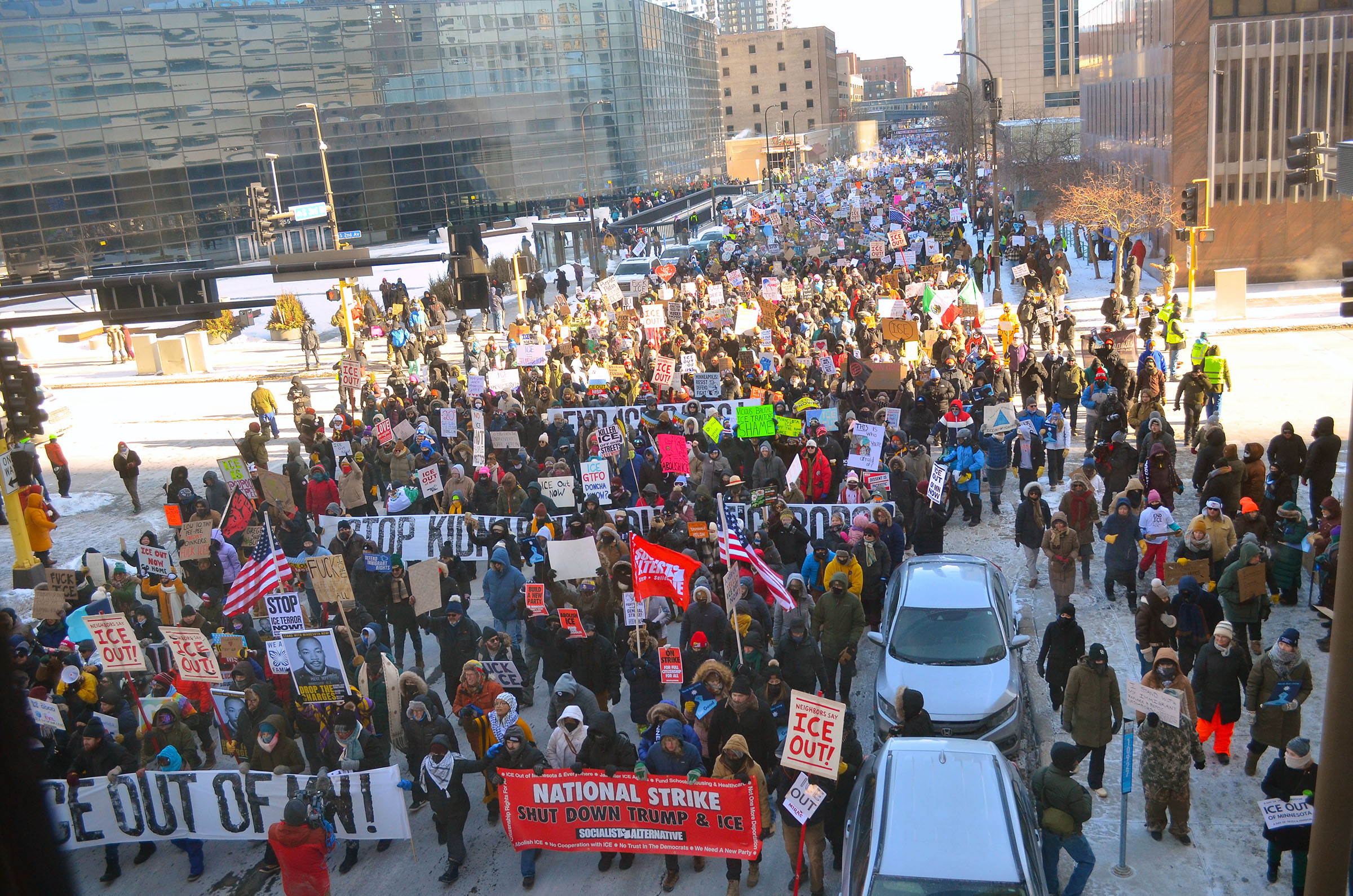
Hundreds of businesses closed Jan. 23, as tens of thousands of protesters marked a “Day of Truth and Freedom” in the streets of downtown Minneapolis, marching in subzero temperatures to demand an end to federal immigration operations in Minnesota.
Local labor organizations, including the Minnesota AFL-CIO and area labor councils in the metro, endorsed the massive march, which culminated with a rally at Target Center. And union members showed up for the event in any number of ways – as trained “union peacekeepers” helping direct traffic around the march, as volunteered stagehands preparing the arena, or by taking a stand in their community or workplace.
Earlier in the day, about 100 clergy members were arrested in a civil-disobedience action at Minneapolis-St. Paul International Airport, a key site in the Department of Homeland Security’s efforts to abduct and rush detained Minnesotans into detention centers.
Organizers behind the one-day action called for “No Work, No School, No Shopping.” The polling found 23% of Minnesota voters participated in some way, with 38% of participants saying they did not go to work and 65% saying they did not shop.
Minister JaNaè Bates, co-director of the progressive faith coalition ISAIAH, called the poll results “staggering.”
“People were willing to take a real hit to their paychecks and demonstrate their resolve for getting ICE out of the state,” Bates said.
 She also noted that 33% of Minnesotans polled said they were more likely to shop at a business that closed in solidarity with the day of action. “People will remember who’s standing by us, and people will remember … who businesses choose to stand behind.”
Indeed, the solidarity on display Jan. 23 offered a stark contrast to the silence from Minnesota’s large corporations.
Groups like ISAIAH have ramped up the pressure on corporations like Target, Delta and Starbucks in recent weeks, demanding they refuse to allow federal agents on their properties – and use their clout in Congress to freeze funding for ICE operations.
A delegation of clergy members took those demands into a meeting with Target CEO Brian Cornell on Jan. 22. In a statement after the meeting, they said Cornell’s response fell short of “the urgency this moment requires.”
Some clergy groups are planning sit-ins at Target stores this weekend.
While the day of action called for no work, most labor groups that endorsed the action cautioned union members to follow the terms of their contracts, which typically include no-strike clauses. Still, hundreds of independent restaurants and retailers closed, and weather-related school closings made it easier for families and workers to show up, too.
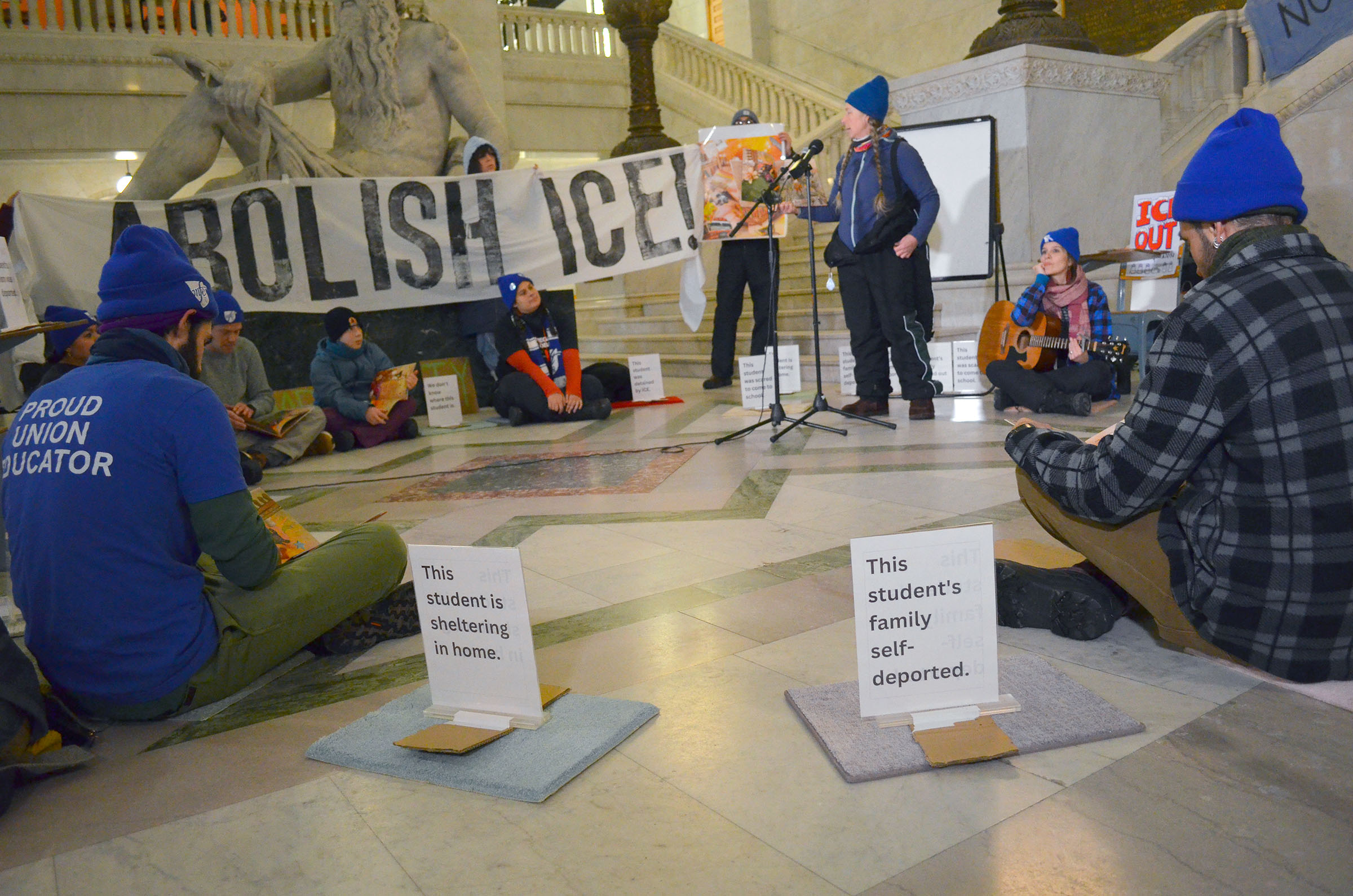
Educators hold a “teach-in” at City Hall.
As demonstrators gathered two blocks away for the march through Minneapolis, rank-and-file members of the Minneapolis and St. Paul educators unions held a teach-in at City Hall, dramatizing the heartbreaking impacts of “Operation Metro Surge” on their schools.
The somber event featured sing-alongs, readings from a children’s book and a group discussion – guided by a teacher at the whiteboard – about how communities and elected leaders can help students and families who have gone into hiding or, worse, seen family members disappear.
St. Paul and Minneapolis are among metro-area school districts that have adopted a hybrid learning model, and the classroom at the teach-in reflected that reality, with empty desks and floor mats marked with signs depicting the fate of absent students.
“Students and staff have been abducted, schools stalked and teargassed, with classrooms missing more students every day,” said Drake Myers, an education support professional in Minneapolis. “I don’t know a single educator who wants our federal tax money going to pay for this.”
Chelsie Glaubitz Gabiou, president of the Minneapolis Regional Labor Federation, noted that messages of solidarity have been pouring into her office since the massive march, including solidarity from unions in other countries.
“Our international labor community is concerned for the welfare of people of their nationalities who are in our communities,” she said. “They are pushing us to fight this fight, especially for people of their nationalities who are being illegally targeted and harassed..
– Michael Moore, UA editor

 Union Advocate
[…] poll conducted by participating labor and faith organizations reports that 23% of registered voters […]