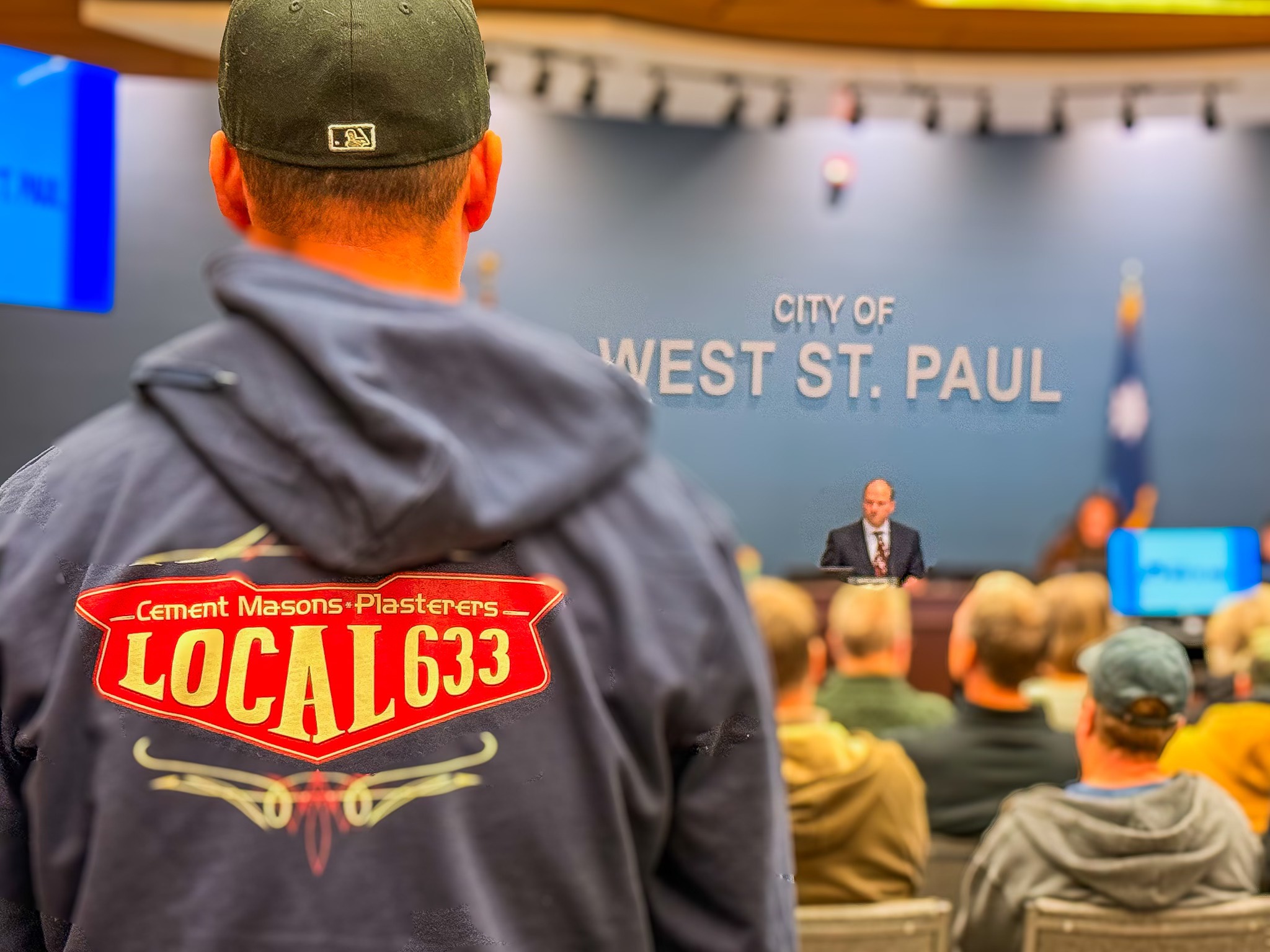
photo courtesy IBEW 110
By mobilizing their members and tapping solidarity from the local labor movement, Building Trades unions won an unexpected fight over prevailing wage in West St. Paul last year.
The city has long required developers to pay prevailing wages on any project that receives $50,000 or more in public assistance. But in July council members and the mayor voted narrowly to allow exemptions on certain projects, with an eye toward a housing development at 150 Thompson Ave.
The vote caught Building Trades unions off guard, but it also “kicked us into overdrive,” Electrical Workers (IBEW) Local 110 representative Brian Winkelaar said. “We thought West St. Paul understood our issues.”
Electricians were among four crafts that would have been exempted from prevailing wage on the 150 Thompson project, along with plumbers, sheet metal workers and sprinkler fitters.
But other unions in the St. Paul Building and Construction Trades Council treated the proposed exemption as an attack on their members, too.
Prevailing-wage rules establish minimum hourly rates, plus benefits, that contractors must pay their workers. The rates are determined by an annual survey so that they reflect area standards, and they are specific to each construction trade.
Federal, state and local governments use prevailing-wage laws to ensure public investments support good jobs – and prevent low-road contractors from squeezing workers’ pay to win a public bid.
“This was an opportunity for the West St. Paul City Council to stand up and say, we want livable wages in our community,” St. Paul Building Trades Executive Secretary Don Mullin said. “We asked them to stand up for the middle class, to hold a standard in our neighborhoods – and they held that standard.”
The council originally scheduled a vote on the exemption for 150 Thompson in early September, but Building Trades unions successfully lobbied members to pump the brakes.
In the meantime, union organizers went to work, scheduling meetings with council members, encouraging tradespeople who live in West St. Paul to raise their voices and building support among the broader labor community.
“We had support from the nurses, SEIU, AFSCME, IBEW, the Building Trades,” Winkelaar said. “People said, ‘Even though it might not affect me, we’re standing with them.’
“There’s so much division in our world, whether it’s between parties or between unions, it really was great to see everybody come together.”
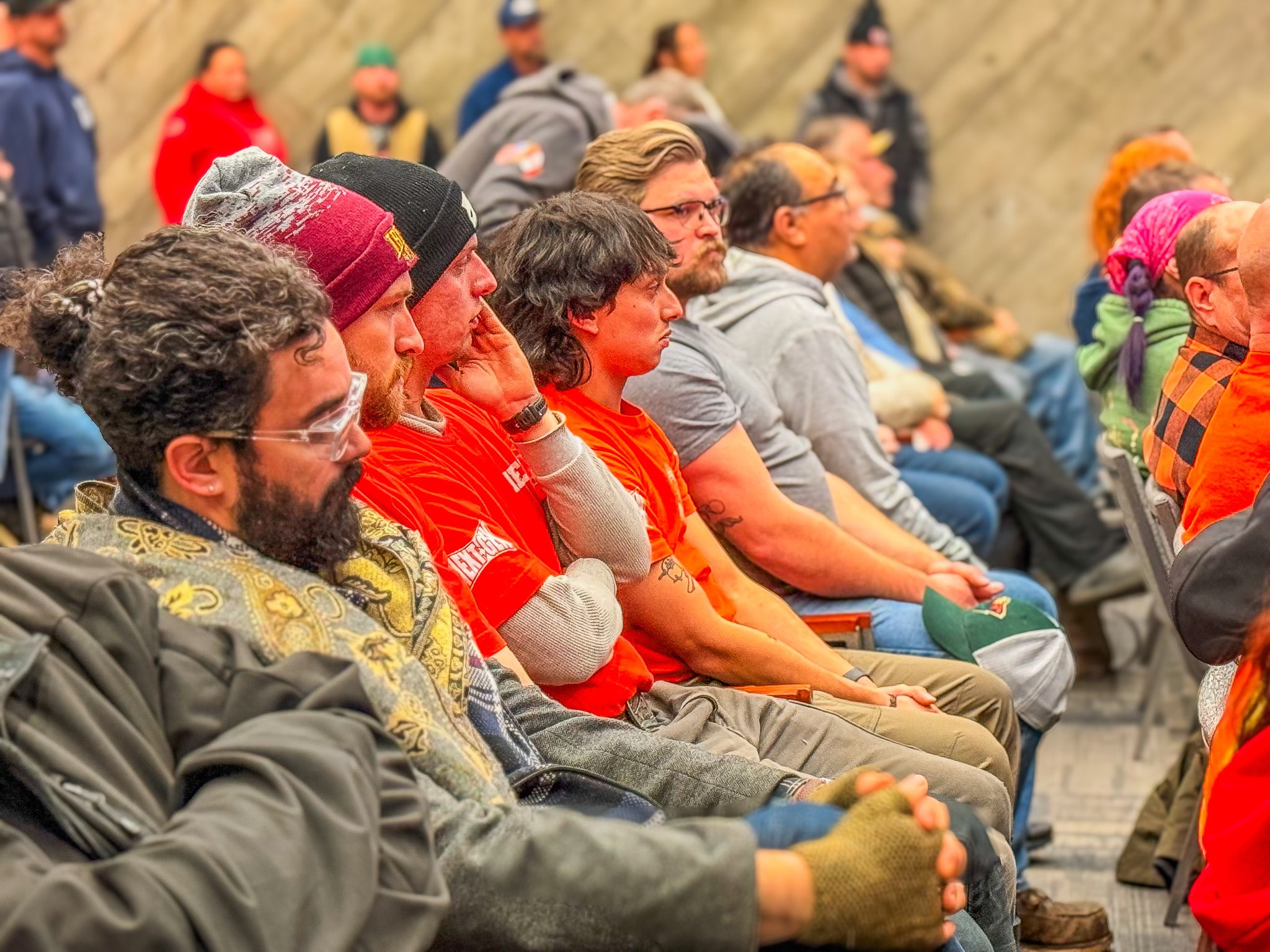 When the issue finally came before the council Dec. 8, union representatives and a strong majority of council members had identified a path forward for the 150 Thompson project that also protected prevailing wage.
With a crowd of about 75 union members in the meeting room, the council voted to apply the State of Minnesota’s rules on prevailing wage to 150 Thompson. Those rules allow contractors to hire registered apprentices, who earn less than journey-level tradespeople, to work on projects covered by prevailing wage.
The move will give the developer some relief while ensuring an even footing for union contractors in the bidding process, as the overwhelming majority of registered construction apprenticeship programs are sponsored by unions.
Council Member Robyn Gulley said the vote showed West St. Paul does, in fact, understand labor’s issues.
“One of the reasons that we protect strong wages is that they protect people in the community who work on these projects, and that is incredibly important,” said Gulley, a labor organizer and educator, who has earned an early labor endorsement in this year’s Senate District 65 election. “We cannot sacrifice our workers.”
– Michael Moore, UA editor
 Union Advocate