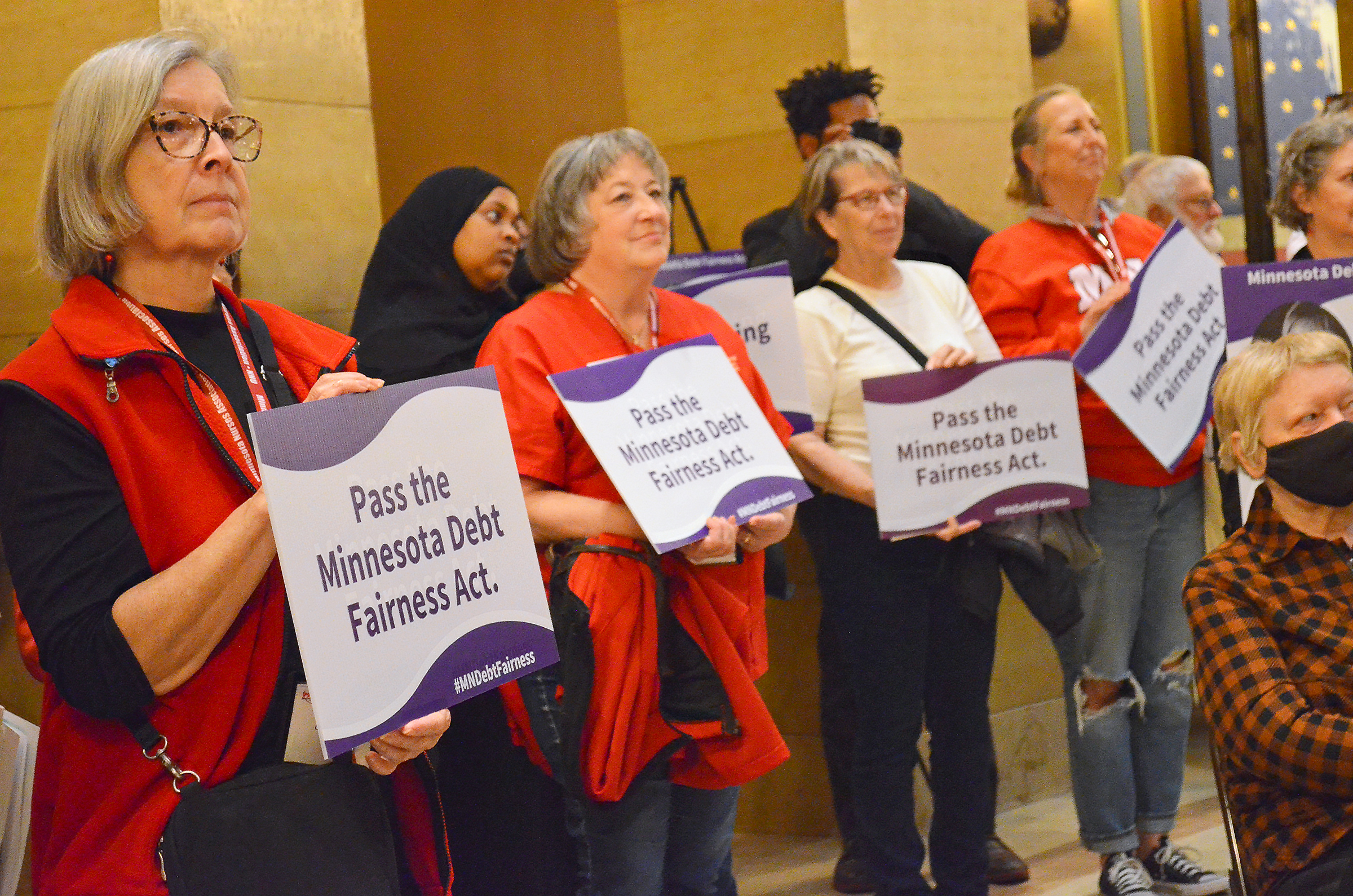
Members of the Minnesota Nurses Association support a bill that would reform laws around medical and other types of debt.
Jennifer Schultz has been cancer free for over two years, but being free from the debt she’s amassed in her battles with the illness feels a long way off for the four-time survivor from St. Paul.
“Sometimes it feels like I’m in a constant cycle of medical debt,” Schultz told labor, faith and community activists who rallied April 15 in the Capitol rotunda.
“There are weeks when I have to choose between filling up my gas tank, buying groceries for myself and making a full payment toward my cancer bills.”
Schultz and other activists applauded a package of debt-related reforms advancing through the DFL-controlled Legislature this session.
Proponents of the Minnesota Debt Fairness Act, including faith-based organizations, health care workers’ unions and Attorney General Keith Ellison, called it a first step toward correcting a debt collection system that needlessly forces families across the state into poverty.
Pastor James Alberts of Higher Ground Church of God in Christ in St. Cloud – one of three religious leaders who spoke at the rally – said debt forgiveness is value shared among faith communities, from Judaism and Islam to Christianity. Alberts pointed to the Lord’s Prayer, which asks for “forgiveness of debts as we forgive our debtors.”
“Mercy and forgiveness are missing in our debt collection system, and here in Minnesota it is time to act in every way we can to fix this,” he said. “We must pass debt relief now.”
Medical debt is the Minnesota Debt Fairness Act’s primary focus, and members of the Minnesota Nurses Association were well represented at the rally. Jennifer Michelson, a retired United Hospital nurse, said MNA members see the strain of medical debt firsthand.
“I didn’t take care of very many patients who could cover the full cost of the care they received,” she said. “It’s hard for our patients to heal if their energy is going toward worrying about medical bills that they can’t afford to pay, or how their families will take care of it if they pass away.”
The proposed legislation would repeal a state law that automatically transfers medical debt to a patient’s spouse. In Minnesota, medical debt is the only kind of debt transferred in this way.
The Minnesota Debt Fairness Act would also ban medical providers from refusing care – or threatening to do so – to a patient with outstanding bills. A study by the Peterson Center on Health Care found 60% of people with medical debt have deferred care to avoid going further into the red.
Additionally, health providers or their collections agents would be barred from reporting patients’ debt to credit bureaus because, Schultz said, bad credit “shouldn’t be a side effect of getting sick.”
Other provisions in the bill would apply more broadly to the state’s debt collection system, making adjustments based on income levels to the maximum percentage of someone’s wages that creditors can garnish – and shielding the last $4,000 in Minnesotans’ bank accounts from garnishment.
“This is so you don’t go to the grocery store to buy groceries for your family and find out you have zero dollars left in your account,” Rep. Liz Reyer (D-Eagan) said. “We know this happens. It’s not right.”
After the rally, members of the House voted to advance a commerce policy bill that included the Minnesota Debt Fairness Act’s key provisions.
But the Senate’s companion bill, passed earlier in the session, did not address debt reform, meaning representatives of the two chambers need a conference committee to settle on a final bill to send to Gov. Tim Walz before lawmakers’ deadline to adjourn May 20.
Attorney General Ellison urged activists at the rally to keep the issue on their representatives’ agenda.
“This is a moral issue,” he said. “It’s not just a legal issue, it’s not just a political issue, it’s a moral imperative to pass this bill. Those signs that you brought, don’t just leave them here. Take that sign with you and put it up somewhere people can see it…
“I want the world to know that we’re passing this bill today, and this is not the end of it.”
 Union Advocate