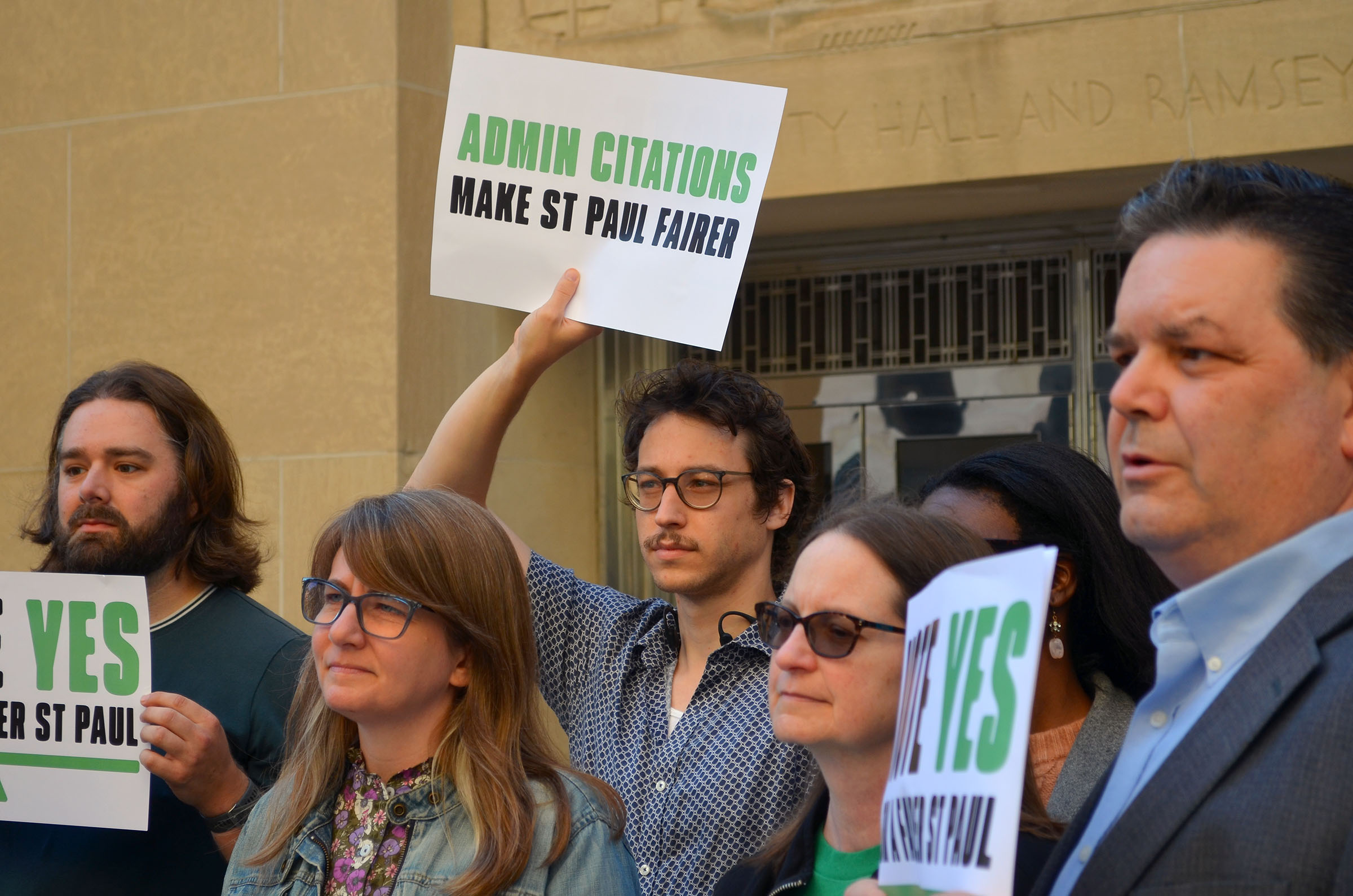
Representatives of labor, faith and community organizations participating in the Vote Yes for a Fairer St. Paul coalition hold a kickoff event outside City Hall.
St. Paul unions are teaming up with labor and community groups this fall on a campaign to advance administrative citations from the general election ballot to the capital city’s charter.
The Vote Yes for a Fairer St. Paul campaign launched with a press conference outside City Hall on Aug. 27. Leaders of labor and faith groups joined workers and tenants in making the case for a “yes” vote on the ballot question before St. Paul voters this fall.
By passing the initiative, voters would confirm the St. Paul City Council’s unanimous vote last spring amending the charter to allow enforcement of certain ordinances through civil fines, rather than criminal charges.
The proposal emerged from the city’s Charter Commission, which voted overwhelmingly late last year to advance it to the council. But opponents collected enough signatures to put the question before voters Nov. 4.
At the kickoff event, Vote Yes leaders said they’re confident the more people learn about administrative citations, the more likely they are to support them. That means education – through press coverage, community engagement and the campaign’s website – will be key to their success.
“The public doesn’t know a whole lot about this,” Rick Varco, political director of SEIU Healthcare Minnesota and Iowa, acknowledged. “We’re working with community organizations to educate their members and supporters, and we hope people who are looking into what this complex thing is will use those resources to decide to vote ‘yes.’”
Some people, though, are familiar with St. Paul’s inability to enforce ordinances with civil penalties – often because they’ve found themselves waiting on a response to code violations that, in most other cities, would not play out in the criminal-justice system.
Of the state’s 25 largest cities, only St. Paul does not allow for administrative citations.
The city’s police department can issue fines for parking tickets and related violations under state law, and the city can assess fines to recover the cost of some property-related matters, like sidewalk shoveling.
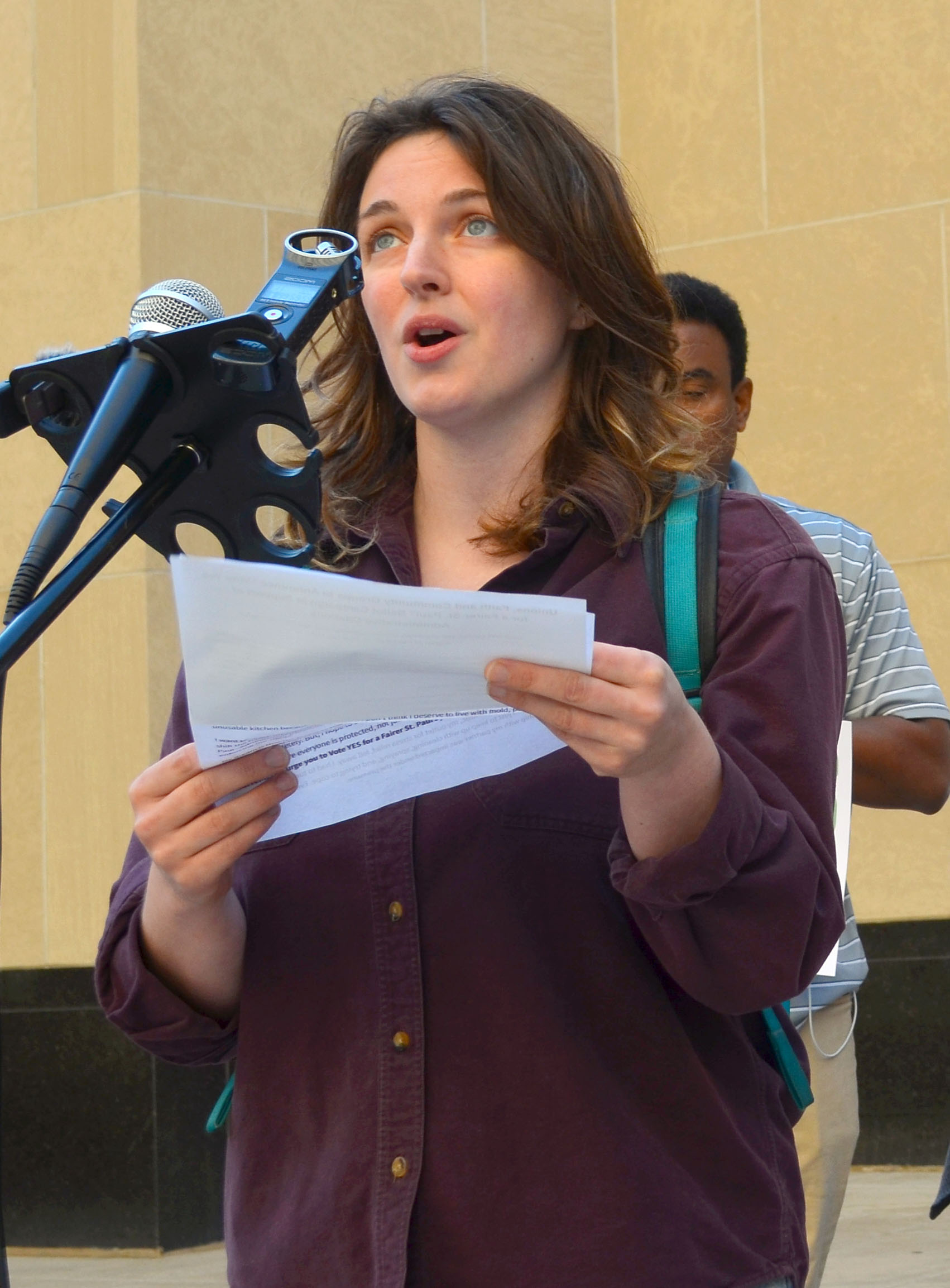
James Blake shares their experience as a renter trying to hold a landlord accountable for unsafe conditions.
But advocates say the city needs more power to take swift action in enforcing labor standards and housing codes, preventing bad employers and corporate landlords from dragging the process out in court.
That’s what recently happened to James Blake after moving into their dream apartment in St. Paul. Blake soon discovered wood rot and mold in the kitchen and a moth infestation in the apartment’s built-in cabinets.
Requests for repairs went unanswered. Blake reported several code violations to the city, which began legal proceedings against the company, but nothing changed, they said, until Blake made the decision to move out four months into their lease.
“The rental company violated multiple deadlines from the city inspectors and even a court order to make repairs,” Blake said. “Watching them face zero consequences left me helpless and exhausted.”
The city’s current structure, advocates say, too often forces renters like Blake – and workers who experience wage theft – to seek relief through the legal system.
“Try to see what kind of lawyer you can hire with my paycheck,” Blake said. “I don’t think I deserve to live with mold, pests and an unusable kitchen because I can’t afford a lawyer.”
Minister JaNaé Bates, co-Executive Director of the progressive faith organization ISAIAH, said administrative citations will make St. Paul a more equitable place to live and work. For residents who commit minor infractions, the change allows them to avoid criminal proceedings, while tenants and workers can leverage real, immediate consequences when powerful bad actors violate their rights.
“Right now, our existing enforcement mechanisms fall hardest on working families and communities of color, while wealthy corporations with deep pockets and legal teams can delay and dodge accountability,” Bates said. “Administrative citations level the playing field.”
– Michael Moore, UA editor
 Union Advocate