Workers steal the show in TPT’s new Ford plant film

The Twin Cities Assembly Plant in Highland Park is gone, but the stories of people who worked there live on in a new, hour-long documentary airing on Twin Cities PBS stations next week.

In “Made in St. Paul: Stories from the Ford plant,” filmmaker Peter B. Myers covers more than 86 years of Ford Motor Company’s history in St. Paul, from Henry Ford’s decision to build a hydro-powered plant along the Mississippi River to the plant’s final shutdown in December 2011.

The documentary “could’ve been a three-hour show,” Myers said, but focuses in on “the plant’s origins, its engineering and architecture, labor issues, and its impact on the development of the city of St. Paul over an 86-year period.”

Ultimately, Myers said, the film is about the people who made a living inside the plant’s walls. He interviewed dozens of them in nearly two years of work on the project.

“Most of the people I talked to spent pretty much their whole careers at this one plant,” Myers said. “This was their life. And across the board, all the workers I talked to felt a great deal of loyalty to this particular plant and took tremendous pride in the quality of their work.”

That sense of pride showed, as workers consistently made St. Paul Ford’s most productive U.S. facility. Ford’s decision to close stemmed not from personnel issues, but changing market trends and a need to modernize the facility, which would have cost $500 million, according to the company.

Also featured prominently in the film is local historian Brian McMahon, author of “The Ford Century in Minnesota,” published by the University of Minnesota Press in 2016.

Myers met McMahon, credited as the film’s principal researcher, around the time of the Ford plant’s closing. Myers was at work on another film – a deep dive into the history of University Avenue – at the time, but he was immediately drawn to the idea exploring “the legacy of something as big as the Ford plant” and its impact on Highland Park, where he’s lived for more than 30 years.

Myers pitched the idea to TPT as his neighbors engaged in public discussion about what redevelopment of the 135-acre Ford site should look like. The debate served as a reminder of just how unique the Twin Cities Assembly Plant was: an enormous industrial site that shared a neighborhood with mostly upper-middle class homes.

“As I followed what’s going to happen on the site now, I thought we should really tell some of the stories about the plant,” Myers said. “Once these folks are gone, they won’t be able to tell the stories anymore.”

Of course, the union that represented workers at the Ford plant, United Auto Workers Local 879, features prominently in the film. Workers at the plant chartered Local 879 in June 1941, but it wasn’t without a fight, as the film documents.

“We tell the story about how Henry Ford for a long time resisted the efforts of labor to organize in his plants,” Myers said. “Ford was the last of the ‘Big 3’ automakers to allow the UAW into the plants, which he did finally in 1941.”

The result of unionization in St. Paul, he added, was dramatic.

“In the ‘40s and ‘50s, working conditions were pretty challenging, and it wasn’t always a nice place to come to work,” he said. “But over the decades the UAW and Ford really approached the organization of the pant in a joint fashion. By the time you got to the ‘70s and ‘80s, by most accounts, things were working pretty smoothly.”

“Made in St. Paul: Stories from the Ford plant” premieres Monday at 9 p.m. on TPT-2, part of the station’s “Minnesota Experience” series. It will rebroadcast at 8 p.m. Jan. 17 on TPT-LIFE, and be available for streaming on www.tpt.org.

One Fair Wage or tip penalty? Debate splits St. Paul service industry

The minimum wage debate in St. Paul has only begun, and already tipped workers are at the forefront.

Two public events this month exposed a divide within the restaurant industry over whether employers should be allowed to pay less than minimum wage, as long as workers make up the difference in tip income.

Proponents call it a “tip credit.” Opponents call it a “tip penalty.”

Whatever it’s called, Minnesota is one of just seven states without one, and that won’t change as Minneapolis’ citywide minimum wage edges closer to $15 over the next six years.

But it’s not for the restaurant industry’s lack of trying. Employers lobbied fiercely for a tip penalty last year in Minneapolis. At the Capitol, they backed Republican lawmakers’ bill to block cities from passing minimum-wage ordinances.

So it’s unlikely the restaurant industry will sit on the sidelines as St. Paul’s newly elected mayor, Melvin Carter, looks to deliver on his campaign pledge to make $15 a reality in the capital city.

A push for ‘one fair wage’

Unions and worker advocacy groups like the Restaurant Opportunities Center United, which is organizing tipped workers in St. Paul, oppose a two-tier wage system. They argue it leaves behind the very workers a minimum-wage increase is supposed to benefit.

“If your business is on the verge of closing because your workers demand to be paid an equitable wage, then you need to think twice about your business model,” said Steven Lewer, a server who lives and works in St. Paul and a supporter of maintaining one fair wage in his industry.

Government data shows job growth in the restaurant industry is outpacing any other area of the economy, but average earnings in the industry – $22,350 per year for full-service waitstaff in Minnesota – are stuck at the poverty level.

That’s why lawmakers in New York, Michigan and elsewhere are moving to roll back tip penalties, ROC United President Saru Jayaraman told tipped workers gathered at the St. Paul Labor Center Jan. 17.

“You as a state have been a shining example for the rest of us,” Jayaraman said. “Why would we consider going backward in St. Paul when the rest of the country is going forward?”

ROC United’s Saru Jayaraman talked with tipped workers supporting one fair wage in St. Paul.

An imbalance of power

Jayaraman presented evidence that restaurant workers in states with a tip penalty experience sexual harassment at nearly double the rate of their counterparts in states like Minnesota. The connection between tipping and harassment isn’t hard to understand, St. Paul server Sarah Kopp-Reddy said.

“When tipped workers rely too heavily on tips, it becomes a lot easier for power dynamics to be thrown off,” Kopp-Reddy said. “When power dynamics are off, servers put up with a lot more. The customer can truly never be wrong.”

Restaurant workers in the U.S. already experience sexual harassment more frequently than workers in any other industry, according to a Buzzfeed analysis of complaints filed with the federal Equal Employment Opportunity Commission. A ROC United survey found 90 percent of women working in the restaurant industry have experienced sexual harassment.

Many employers in the industry, Lewer said, take advantage of workers’ reliance on tips to create a “toxic work environment.”

“Employers will say you’re not smiling enough, or you need to be able to take this harassment you’re getting at the table,” Lewer said. “You’re going to view those things as OK because you need the job, you need the tips. That’s not the way a working environment should exist.”

A split among servers

Lewer and Kopp-Reddy, both 28, see growing support among tipped workers in St. Paul for an ordinance establishing one fair wage, but they acknowledged support is far from universal.

Proponents of the tip penalty staged a public event Jan. 8 at a Cathedral Hill bar, where restaurant owners and staff made the case for paying tipped workers less. Several servers and bartenders expressed concern that their employers would not be able to absorb a higher minimum wage, or that patrons would no longer leave tips.

One shift manager from a bar on West 7th Street spoke on behalf of his wife, a server who, when it comes to higher wages, “doesn’t need it, doesn’t want it.” A bartender from Minneapolis said he’s looking for work in St. Paul now that his hourly wage is on track to increase annually. The owner of a Como Park eatery warned that iPads could replace waitstaff if their wages go up.

Doomsday predictions and scare tactics are a permanent fixture of the minimum wage debate, Jayaraman said, but they aren’t backed up by empirical evidence.

Look no further than Minnesota’s own restaurant industry. The state’s minimum wage has increased by 33 percent since 2014, when state lawmakers passed the first increase in decades. Despite dire warnings from industry lobbyists during the legislative process, employment in restaurants and bars has grown by over 16,000  since 2014, according to data compiled by the state’s Department of Employment and Economic Development. On average, people working in restaurants are earning $57 more per week.

“Tipping isn’t going to go away” as the minimum wage goes up, Jayaraman said. “But no amount of evidence seems to overcome fear.

“What we’re trying to do is offer hope, to let people know that there’s a beautiful future on the horizon in which we, as tipped workers, are treated as the professionals we truly are.”

Melander steps down as St. Paul Building Trades’ top officer

Incoming and outgoing officers of the St. Paul Building Trades: (L to R) Tom McCarthy, Stan Theis, Harry Melander and Don Mullin.

Incoming and outgoing officers of the St. Paul Building Trades: (L to R) Tom McCarthy, Stan Theis, Harry Melander and Don Mullin.


Harry Melander has stepped down after 10 years as the executive secretary of the St. Paul Building and Construction Trades Council, which swore Don Mullin into office as Melander’s successor in the full-time position at a delegate meeting tonight.

Delegates voted unanimously to elect Mullin at a meeting last month. They also elected Tom McCarthy of Plumbers Local 34 to serve as president. McCarthy replaces Local 34’s Stan Theis, who retired earlier this year.

Although Melander is stepping down from the St. Paul Building Trades, he will continue to serve as president of the Minnesota Building and Construction Trades Council, a part-time position. Two years remain on his term in office.

To facilitate a smooth transition in leadership, Mullin began working alongside Melander in the Building Trades’ office last month. Mullin acknowledged he has big shoes to fill in his new job.

“Harry has so much knowledge and so many connections,” Mullin said. “He understands that all of the Trades have a part to play. He understands what the ‘Fitters are doing, what the Plumbers are doing, what the Ironworkers are doing and the rest.

“He’s done so much, given back so much to St. Paul and the state of Minnesota. He really cares about people and the advancement of the middle class.”

Harry Melander, second from left, shown in a Union Advocate file photo from 1988, when he was president of Carpenters Local 87. Melander and Al Garcia of Centro Cultural Chicano spoke at a press conference deploring conditions at a construction site in Bloomington that employed migrant workers.

Harry Melander is second from left in this Union Advocate file photo from 1988, when he was president of Carpenters Local 87. Melander and Al Garcia of Centro Cultural Chicano spoke at a press conference deploring conditions at a construction site in Bloomington that employed migrant workers.

A ‘lasting impact’ on St. Paul

A member of the Carpenters union, Melander rose to the position of president in Local 87 before going to work full time as a business representative for the St. Paul Building Trades in 1997, assisting then-Executive Secretary Dick Anfang.

Anfang and his predecessor in office, Bill Peterson, reached out to elected officials, community leaders and developers, cultivating relationships, Melander said, that would create jobs for Building Trades union members for years to come. Melander’s focus over the last 10 years has been on maintaining those relationships – and building new ones.

“We have a great relationship with cities, counties and school boards in the area,” Melander said. “I’ve been fortunate enough to have an excellent mayor to work with in St. Paul, as well as the City Council.”

The admiration is mutual, St. Paul Mayor Chris Coleman said.

“Harry is a good friend and has been an incredible public servant for the City of Saint Paul,” Coleman said. “He is a strong advocate for women and immigrants entering the Building Trades, a determined and resolute trade unionist and an unwavering voice for job creation and economic development.

“While we will all miss his colorful quips and great sense of humor, his leadership within the labor movement will leave a lasting impact on our city.”

Melander’s tenure with the St. Paul Building Trades was not without challenges. He was at the helm during a sharp downturn in the industry following the economic collapse of 2008, with work falling off in some crafts by as much as 70 percent. But infrastructure investments like the Green Line and major construction projects like Target Field – both aided by the Building Trades’ lobbying efforts at City Hall and the Capitol – helped soften the recession’s blow.

“The reason we as a council stayed together is because we have affiliates who appreciate what the council does and who believe in what the Building Trades do,” Melander said. “The industry is very cyclical. But the Building Trades remain a great place for men and women to have a middle-class lifestyle.”

In addition to staying on as president of the statewide Building Trades council, Melander will remain involved in overseeing construction of a new labor center at 345 W. 7th St. “We’re going to give people a new home in St. Paul for a strong labor movement in the future,” he said.

Melander’s advice to Mullin, his successor?

“It’s about relationships and trust,” Melander said of the job. “You’re not always going to get to ‘yes,’ but if you can’t do the deal, you walk away with a smile on your face anyway.”

Don Mullen

Don Mullin

Mullin takes the reins

Mullin, 43, is a White Bear Lake resident and a 20-year member of the International Union of Painters and Allied Trades. Before his election to the Building Trades Council, Mullin worked as political director of IUPAT District Council 82 and as business representative of Sign and Display Local 880.

Mullin said he hopes to maintain and build on the Council’s existing relationships with local governments, including school boards, city councils and county boards. When those relationships are strong, the Council is in a better position to “police our work,” he said.

“We can look for opportunities to see project labor agreements and enforcement of prevailing wage laws,” he said. “A lot of development comes through city dollars. We need to be developing those relationships and engaging these communities in what we’re all about.”

Ramsey County recently dedicated a staff person to investigating and enforcing prevailing wage on a part-time basis. Mullin said he hopes to recruit other municipalities in the region to pool their resources with the county to support a full-time position.

Mullin also will work to support unions in their efforts to reach out to communities and demographic groups underrepresented in the Trades.

“If you look at most union members today, they’ve gotten here through a family member or somebody else they know,” he said. “We need to be engaging other communities to make sure they know we’ve got a great pathway into the middle class. There are some great career opportunities in this area.”

In addition to his work with IUPAT District Council 82, Mullin has served two years on the White Bear Lake School Board, and he sits on Ramsey County’s Workforce Investment Board and its task force on ice arenas.

Backed by union funds, Penfield project brings jobs downtown St. Paul

St. Paul Mayor Chris Coleman (right) and members of the City Council cut the ribbon at a grand opening celebration for The Penfield development.

St. Paul Mayor Chris Coleman (right) and members of the City Council cut the ribbon at a grand opening celebration for The Penfield development.

Union members did more than just build The Penfield, the comprehensive, mixed-use development downtown St. Paul that celebrated its grand opening Feb. 6. They financed the project as well.

The Penfield is the latest local investment by the AFL-CIO Housing Investment Trust (HIT), which backs union-build construction jobs across the country with capital from union pension funds.

And union members will continue working on the Penfield site. Union grocer Lund’s plans to open a store in the building May 15, with an estimated 75 employees.

The City of St. Paul, through its Housing and Redevelopment Authority, has supported The Penfield, located at 101 E. 10th St., just off Metro Transit’s Green Line, as a key part of its downtown redevelopment program.

Mayor Chris Coleman credited the project with bringing quality, market-rate housing and a full-service grocery store to the area, while also creating jobs and sparking ongoing economic growth.

“When I took office in 2006, the Penfield project was one of our No. 1 priorities,” Coleman said. “We knew it would help the rest of the city develop. The challenge was, as the economy collapsed, the resources that we needed [for] the project were scarcer and scarcer.

“It was the Housing Investment Trust that allowed us the resources we needed to get this project in the ground and get people to work building it.”

The experience of working on The Penfield was equally rewarding for members of the Building Trades unions.

“When you see projects going on all over the metro, you get a good feeling that jobs are going to be around,” said Michael Ahman, a member of IBEW Local 292.

Matt Ferguson, another Local 292 member, added that “it’s an awesome thing to be able to have lots of guys put to work who otherwise might be sitting at home.”

“We are appreciative of the mayor’s administration for helping improve the quality of life in St. Paul with this important development project,” St. Paul Regional Labor Federation President Bobby Kasper said.

As a LEED “silver-certified” development, The Penfield enhances St. Paul’s green credentials. The former site of the city’s public safety building now boasts an 18,000-square-foot green roof.

“We went into this project wanting to have a clean building that is sustainable for the future,” Coleman said. “The fact that the HIT was able to partner with us and drive those green decisions was really important for us.”

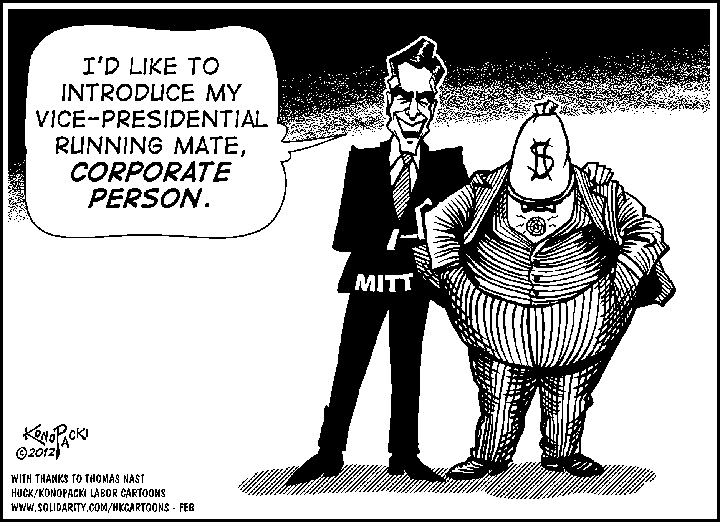
St. Paul City Council to consider resolution against corporate personhood

The St. Paul City Council will consider a labor-backed resolution opposing corporate personhood at its meeting Wednesday, June 13.

Council Member Dave Thune, who authored the resolution, said he expects it to pass. Organizers with the Move to Amend coalition in St. Paul are planning a rally and press conference at 3:40 – 10 minutes after the Council is scheduled to vote on the resolution – in the City Hall lobby.

Pushing cities like St. Paul to pass resolutions is the present organizing strategy employed by Move to Amend, a nationwide organization working to pass a constitutional amendment declaring that inalienable rights belong to human beings only.

Thune modeled his resolution after a similar measure passed by the Duluth City Council in December. Duluth was the first Minnesota city to pass such a resolution, sparking similar resolution drives in cities across the state.

If passed, Thune said, St. Paul’s resolution will “show a groundswell of people care about this and are concerned about it. It’s both a message to decision makers in Washington, but also – and probably most importantly – meant to keep the discussion and the outrage alive at the grassroots level.”

Outrage surrounding corporate personhood exploded with the U.S. Supreme Court’s 2010 Citizens United decision, which struck down campaign-finance laws restricting the ability of corporations – and unions – to spend money to influence elections, candidate selection and policy decisions.

“When that ruling came down it just shook people’s belief and trust in the government,” Thune said. “It turned the reigns over to unelected decision makers making decisions based on how much money was available. It’s just wrong.”

Although Citizens United expanded their ability to spend money to influence elections, unions have criticized the decision loudly from the day it was handed down, and several union groups have backed the Move to Amend campaign.

The St. Paul Regional Labor Federation, AFL-CIO, passed a resolution against corporate personhood in September 2011. The organization is urging members to turn out for the City Council vote on Wednesday.

Thune also urged citizens to attend the vote and the rally afterward.

“It’s pretty well established that cities are the bottom line of government,” Thune said. “We’re showing that at the level of government closest to the people, we are fed up with this thing. We the people are making a statement.”

For more information on the Move to Amend campaign’s work in St. Paul, e-mail minnesota.move.to.amend@gmail.com.

Labor Bowl fundraiser nets $14,000 for AFL-CIO Community Services program

Click to view a photo gallery from Labor Bowl 2012.

The St. Paul Regional Labor Federation’s annual Labor Bowl event May 3 raised more than $14,000 raised for the St. Paul Labor Studies and Resource Center, making it the most successful Labor Bowl the Regional Labor Federation has ever hosted.

The bowling fundraiser at Midway Pro Bowl in St. Paul drew 16 teams. Sponsors included local unions, labor federations and area businesses.

View team photos in the Labor Bowl photo gallery.

The Labor Studies and Resource Center is the non-profit arm of the St. Paul RLF. The LSRC’s primary venture is the AFL-CIO Community Services Program, which provides direct assistance to union members facing financial or other crises.

This year’s Labor Bowl winners, who received gift certificates to Mancini’s, include Caleb Bain (high game), Kerry Wenger (two-game high) and Uriel Perez Espinoza (low game). Frank Loeffler won a raffle for Twins tickets.

On Saturday, May 12, help Letter Carriers ‘stamp out hunger’

Remember to place a bag of non-perishable food items near your mailbox Saturday, May 12, date of the 20th annual “Stamp Out Hunger” food drive, organized nationwide by the National Association of Letter Carriers union.

The food drive is the nation’s largest one-day food drive, and letter carriers throughout the metro area will be participating. The Twin Cities-area goal for this year is to collect more than 1.2 million pounds of food, which will be distributed to local emergency food shelves by Second Harvest Heartland.

Letter carriers will pick up donated food along their routes and bring the donations to local post offices and to waiting trucks at several Cub Foods locations. Volunteers will be needed to help unload letter carrier vehicles and load the larger trucks. For a list of locations, and to volunteer, visit www.2harvest.org.

The Union Advocate will publish photos of Stamp Out Hunger volunteers online and in our print copy. Submit your photos to mmoore [at] stpaulunions [dot] org – and be sure to identify the volunteers and their union locals!