Solidarity actions with Verizon strikers to continue in Twin Cities

Workers picketed in solidarity with 39,000 striking Verizon workers outside the company's Roseville store last week. (Labor Review photo)

Workers picketed in solidarity with 39,000 striking Verizon workers outside the company’s Roseville store last week. (Labor Review photo)

Union members in the Twin Cities plan to keep the heat on Verizon this week with two more actions in support of the company’s 39,000 striking workers in the Northeast U.S.

Solidarity actions are planned from noon to 2 p.m. May 11 outside Verizon’s store at 474 Hamline Ave. N. in St. Paul, and from noon to 1 p.m. May 12 outside the company’s downtown Minneapolis location, at 800 Nicollet Ave (RSVP on Facebook).

Last Thursday, U.S. Rep. Keith Ellison joined more than 50 protesters outside Verizon’s Roseville location, calling on Verizon to get back to the bargaining table and stop trying to outsource union members’ jobs. “It’s got to be us in Minnesota standing with people struggling for decent pay and decent treatment,” Ellison said.

Striking workers are members of the Communications Workers of America and the International Brotherhood of Electrical Workers. The work stoppage began April 13, and it continues despite Verizon’s move to cut off striking workers from their health insurance benefits effective May 1.

Verizon workers’ previous contract, settled after a 2-week strike in 2011, expired last August. In negotiations since then, workers say, the company has refused to drop its demand for language allowing Verizon to contract out their jobs – the same demand that led to the strike four years ago.

Why is a highly profitable company looking to cut costs with cheap labor? The answer is simple: greed.

According to Verizon’s filings with the Securities and Exchange Commission, the company’s top four executives raked in $41 million in 2015 alone, and they’ve taken home $114 million in the last three years.

“Verizon wants to boost their bottom line by taking away the stability and reliability their employees once had,” Mona Meyer, president of the CWA Minnesota State Council, said. “This strike is bigger than Verizon. It’s about protecting good, hometown jobs in this country. It’s about securing a brighter future for our families and our communities. It’s about standing up and fighting back!”

Solidarity action targets Chipotle festival in Minneapolis

10801624_590245211102866_6669760419938965241_nChipotle claims its motto “food with integrity” applies throughout its supply chain. But workers who make burrito bowls at a plant outside Los Angeles say the company has turned a blind eye to their fight for respect and a voice on the job.

The workers have been organizing with the United Steelworkers for over a year, seeking fairness, better wages and safer working conditions at a plant owned by Finland-based packaging conglomerate Huhtamaki in Commerce, Calif.

Huhtamaki operates several unionized plants in the U.S. and abroad, but it’s waging a relentless anti-union campaign in Commerce, workers say. Charges filed with the National Labor Relations Board accuse the company of retaliating against pro-union workers.

Twin Cities activists will stand in solidarity with Huhtamaki’s workers during a demonstration Saturday, Aug. 22, at Chipotle’s Cultivate Festival in Minneapolis. Supporters will meet at 1 p.m. Click here to view the event page on Facebook.

The demonstration, Los Angeles-based organizer Graham Fortier told delegates to the St. Paul Regional Labor Federation earlier this week, will keep the pressure on Chipotle to “talk to Huhtamaki as their supplier, and make them respect their own code of conduct.”

“Chipotle puts a high price on social responsibility,” Fortier added. “Recently, the company cut a contract with its pork supplier because they were abusing pigs. What we’re asking is that they also look into the people who are actually making their product.”

Huhtamaki workers have repeatedly sought meetings with management to address substandard working conditions at the Commerce plant, including oppressive heat and arbitrary discipline. Management refused their request – and doubled down on a union-avoidance campaign.

According to the Steelworkers, Huhtamaki spent $500,000 on legal fees for a union-busting law firm last year, spied on workers, forced them to sit through anti-union meetings and mailed anti-union propaganda to their homes.

“We had one woman who fainted from heat exhaustion and the company sent her home, then disciplined her for missing part of her shift,” Fortier said. “That’s the kind of attitude they have toward their workers.”

Workers to rally outside courthouse as AT&T sues to deny their sick pay

web.CWAstrike-picket1

CWA members walk a picket line outside AT&T offices downtown Minneapolis during a grievance strike in May 2015.

AT&T is challenging a new Minnesota law allowing workers to use paid sick time to care for family members.

But as the Fortune 500 telecommunications company appears before a federal judge in Minneapolis on Friday, members of the Communications Workers of America will rally outside the courthouse with a simple message: AT&T is not above the law.

The rally will begin at 10:30 a.m. Friday, July 17, outside the U.S. Courthouse, 300 4th St. S., Minneapolis. [Click here to view the Facebook event page.]

AT&T’s challenge involves only workers with more than 25 years of experience with the company, who have seen their requests for sick pay to cover time spent caring for family members denied. Similar requests from less-tenured workers have been approved by the company.

CWA, the union that represents AT&T workers in Minnesota and across the country, has filed grievances on behalf of employees, and the Minnesota Department of Labor and Industry last year issued a direction to comply with Minnesota Statute 181.9413, which expands sick leave to cover family members.

But AT&T has delayed resolution on both fronts by challenging the law in federal court.

“AT&T is actually spending more money on lawyers to avoid following the law than it would cost them to comply with it,” CWA Local 7250 President Shari Wojtowicz said.

In May, AT&T workers staged a grievance strike in Minneapolis to show solidarity with co-workers who have been denied sick pay.

Debra Derke, an AT&T employee for nearly 30 years, estimated she’s lost eight months’ pay since her husband suffered a string of medical emergencies that began with a heart attack in August 2013.

“They’re basically discriminating against their most senior, most dedicated people, the people who have made this company what it is,” Local 7250 member Susan Anderson said. “It’s shameful, especially with the profits they have, the perks that their CEO gets. Yet they are basically trying to nickel and dime us to death.”

Farm Bill stalls, McCollum and Ellison join call for Crystal Sugar to end lockout

American Crystal Sugar appears to be losing favor in Congress at a time when the company needs it most.

With the federal Farm Bill stalled in the House of Representatives, 37 members of Congress, including Minnesota Reps. Betty McCollum and Keith Ellison, advised Crystal Sugar CEO Dave Berg to get serious about finding “common ground” with the 1,300 union workers locked out of their jobs for nearly 14 months.

In a letter addressed to Berg and union negotiator Steve Bertelli (download as PDF), federal lawmakers noted the union’s “willingness to meet and discuss the issues,” and called Crystal Sugar’s take-it-or-leave-it approach to negotiations “troubling.”

“A final agreement requires negotiation,” the letter says. “It is incumbent upon the parties to bargain in good faith and genuinely seek to find common ground so that a final agreement can be reached.”

Minnesota Sens. Amy Klobuchar and Al Franken and Reps. Collin Peterson and Tim Walz sent a similar letter to Berg and Bertelli last month.

Moorhead-based Crystal Sugar locked out its workers Aug. 1, 2011, after members of the Bakery, Confectionery, Tobacco Workers and Grain Millers union voted overwhelmingly to reject the company’s final contract offer.

The two sides have met occasionally since then, and union negotiators have agreed to meet most of the company’s demands for economic concessions, including higher health care premiums.

Rather than meet workers in the middle, Crystal Sugar countered with no notable changes to its offer, and workers have voted twice to reject it since the lockout began. They say Crystal Sugar insists on contract language that will give management the authority to contract out union members’ jobs, ignore seniority in personnel decisions and bypass hard-fought grievance procedures.

Although Crystal Sugar is seeking to strip its workers of their safety net, the farmer-owned cooperative is lobbying fiercely in Washington D.C. to protect a safety net of its own.

Provisions in the federal Farm Bill known as the Sugar Program keep sugar prices artificially high by limiting domestic producers’ exposure to foreign competition. Many in Congress view the Sugar Program as an unnecessary intervention in the free market, but supporters call it a necessary boost for rural economies.

Those supporters include many urban, pro-labor lawmakers like Ellison and McCollum. But with the current Farm Bill likely to expire at the end of the month, Crystal Sugar’s lockout isn’t helping efforts to get a new Farm Bill passed into law.

Locked-out Crystal Sugar workers picket outside a Crystal Sugar shareholder’s home in Crookston.

The lockout “isn’t in the best interests of working people, and it’s not in the best interests of the Sugar Program,” said Bill Harper, McCollum’s chief of staff.

Ellison said the labor dispute is “pulling apart the building blocks of a good relationship” that has served workers and farmers well in the past.

“The company and the workers have always been supportive of the Sugar Program because it’s made the company profitable and, historically, has allowed the company to pay the workers in a way that’s fair,” Ellison said. “If they want to break that arrangement, it’s not going to help anyone.”

Perhaps with an eye toward going it alone on Capitol Hill, Crystal Sugar has spent more than $1.8 million on federal campaign contributions this election cycle, according to the Center for Responsive Politics.

In a letter sent Aug. 21, AFL-CIO President Richard Trumka called on labor-endorsed members of Congress who received Crystal Sugar cash to use their “influence and stature to insist that the company resolve this dispute immediately and end the lockout” – and to return the donation if Crystal Sugar refuses.

McCollum is among a handful of lawmakers who have returned the cash, Harper said.

Ellison, meanwhile, holds out hope that continued pressure from members of Congress who have worked with the company in the past will prod Berg and Crystal Sugar’s farmer-shareholders toward the middle ground in negotiations.

“Why would they not want to do the right thing by the union?” Ellison said, recalling two speeches he made on the House floor about the lockout. “This is a question I’ve raised and I’m going to continue to raise.”

Take Action:

For more information on the lockout and how to support locked-out workers and their families, go to www.CrystalGreed.com.

For more information on the toll Crystal Sugar’s lockout is taking on the company’s productivity and efforts to pass the Farm Bill, go to www.CrystalSugarFacts.com.

Click here to thank Rep. Betty McColllum for her continued support of Crystal Sugar’s locked-out union workers.

Click here to thank Rep. Keith Ellison for his continued support of Crystal sugar’s locked-out union workers.

Walter Frederickson: A tax for the people, not on the people

Walter Frederickson, R.N.

Earlier this spring, I stood on the steamy streets of Chicago and witnessed a revival that my union brothers and sisters in the Windy City said was a long time coming. I’d been swept into town a day earlier along with hundreds of nurses, union members and others to help National Nurses United (of which MNA is a founding member) launch what quickly became a national movement – the call for a “Robin Hood Tax” on the “Too Big to Fail” banks and Wall Street speculators who created this financial nightmare.

NNU put on a visual spectacle that afternoon, one that included hundreds of nurses dressed in bright red scrub tops, green masks and the type of pointy hats everyone associates with Robin Hood. Dozens of nationally-recognized speakers and musicians took the stage to share their support, and my union friends in Chicago told me it had been far too long since the city had seen this type of peaceful, public protest filling its streets. While I like to think our colorful costumes and pointy hats had something to do with the energy and passion that was unleashed in and around Daley Plaza, the reality is this: People of all stripes are ready to embrace an idea whose time has come.

It’s a simple concept: Putting a small “Financial Trans-action Tax” of less than one-half of one percent on the types of speculative Wall Street financial transactions that created the global economic crisis we’re still trying to recover from.

A simple idea, sure, but one that carries the support of a powerful and diverse group of people, including Bill Gates, Warren Buffet, Nobel Prize-winning economists and thought leaders, religious entities and faith leaders, politicians and many more – from nurses to firefighters to AIDS activists to environmentalists to small business owners.

In the U.S., the Robin Hood Tax has the power to raise hundreds of billions of dollars every year. It can provide funding for jobs and put our union brothers and sisters back to work. It can kick start the economy and get us back on our feet. It can provide education, health care and financial support for the least among us by funding social safety net programs. And that’s just for starters!

Best of all, the Robin Hood Tax won’t affect ordinary Americans. It won’t touch our personal savings or other everyday consumer activity such as ATM withdrawals or our use of debit cards. It’s easy to enforce and tough to evade.

This is a tax on Wall Street, which created the greatest economic crisis in our nation since the Great Depression. These are the same people who have returned to record profits and bonuses while ordinary Americans, the 99 percent, continue to pay the price of the 1 percent’s self-created financial meltdown. The Robin Hood Tax is not a tax on the people. Rather, it is a tax for the people.

Take a minute to learn more at www.RobinHoodTax.org. And if you want to don a pointy hat, wear a green mask and take to the streets to let people know about this growing movement, know this – I’m with you!

– Walter Frederickson, RN, is executive director of the Minnesota Nurses Association, a union of 20,000 nursing professionals.

Nurses call for ‘Robin Hood Tax’ on Wall Street transactions

Registered nurses Elayne Best (left) and Carol Diemert join the call for a “Robin Hood Tax” outside J.P. Morgan’s Minneapolis offices.

Dressed as modern-day members of the band of Merry Men, union nurses fanned out across downtown Minneapolis today, doling out bottles of water and a prescription for healing what ails the American economy.

The nurses’ solution? A “Robin Hood Tax” on Wall Street transactions.

The plan would place a small sales tax – less than half of 1 percent – on trades of stocks, bonds, derivatives and currencies. Revenues would help reverse declining public support for schools, health care and infrastructure repair and development – and put an estimated 9 million Americans back to work.

Linda Hamilton, president of the 20,000-member Minnesota Nurses Association, called it a “tax for the people, not on the people.”

Hamilton’s union organized the Robin Hood-themed demonstration – many nurses wore pointed, green hats and masks – to coincide with similar actions in 15 other U.S. cities.

The MNA and its parent union, National Nurses United, began calling on lawmakers to “take from Wall Street and give to Main Street” last year. Since then they have been joined by dozens of other public-health, civic and advocacy organizations, as well as prominent economists and celebrities.

The Robin Hood Tax is aimed at high-volume trading, which today makes up a majority of all trades. Experts say the tax will help place limits on the reckless short-term speculation that threatens financial stability.

“Wall Street’s reckless speculation and risky deals caused our economy’s most devastating crash since the Great Depression, forcing millions of Americans to lose their jobs, their homes and their pensions,” said Jean Ross, a MNA member and co-president of NNU. “Three years later, Americans on Main Street still struggle to recover from a crisis we didn’t create. This is the way to start to turn it around.”

In Minneapolis, nurses rallied outside the offices of J.P. Morgan Chase, the financial giant that recently announced it had lost more than $2 billion by gambling on credit derivatives.

MNA staff representative Linda Lange and registered nurse Bob Michaelson hand out water and fliers downtown Minneapolis.

It is that type of risky behavior, MNA member Bob Michaelson said, that a “Robin Hood Tax” would help curtail. A former accountant, Michaelson switched careers 10 years ago. He entered the medical field and has worked as a registered nurse at Abbott Northwestern Hospital in Minneapolis for the last year.

When he saw his union’s plan for combating Wall Street greed, Michaelson, who calls himself a “recovering corporate tax accountant,” knew he had to get involved.

“The ‘Robin Hood Tax’ makes sense because of the volume of transactions that we have on Wall Street that do not generate income for the common good,” Michaelson said. “It’s the Wall Street banking firms that profit from all these trades.”

Nurses don’t need a background in economics to know the U.S. economy isn’t working for middle class families, Michaelson added. After all, Robin Hood didn’t have his MBA.

“Nurses are concerned about the daily lives of everybody,” Michaelson said. “People look to us for good judgment on things.”

MNA President Hamilton put it this way: “People are suffering, and nurses take care of people. Nurses are coming up with solutions.”

For more information on the “Robin Hood Tax,” go to www.robinhoodtax.org.

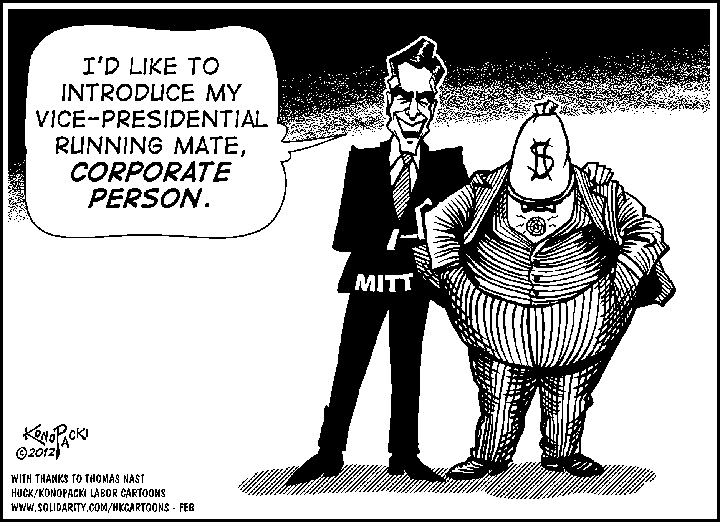
St. Paul City Council to consider resolution against corporate personhood

The St. Paul City Council will consider a labor-backed resolution opposing corporate personhood at its meeting Wednesday, June 13.

Council Member Dave Thune, who authored the resolution, said he expects it to pass. Organizers with the Move to Amend coalition in St. Paul are planning a rally and press conference at 3:40 – 10 minutes after the Council is scheduled to vote on the resolution – in the City Hall lobby.

Pushing cities like St. Paul to pass resolutions is the present organizing strategy employed by Move to Amend, a nationwide organization working to pass a constitutional amendment declaring that inalienable rights belong to human beings only.

Thune modeled his resolution after a similar measure passed by the Duluth City Council in December. Duluth was the first Minnesota city to pass such a resolution, sparking similar resolution drives in cities across the state.

If passed, Thune said, St. Paul’s resolution will “show a groundswell of people care about this and are concerned about it. It’s both a message to decision makers in Washington, but also – and probably most importantly – meant to keep the discussion and the outrage alive at the grassroots level.”

Outrage surrounding corporate personhood exploded with the U.S. Supreme Court’s 2010 Citizens United decision, which struck down campaign-finance laws restricting the ability of corporations – and unions – to spend money to influence elections, candidate selection and policy decisions.

“When that ruling came down it just shook people’s belief and trust in the government,” Thune said. “It turned the reigns over to unelected decision makers making decisions based on how much money was available. It’s just wrong.”

Although Citizens United expanded their ability to spend money to influence elections, unions have criticized the decision loudly from the day it was handed down, and several union groups have backed the Move to Amend campaign.

The St. Paul Regional Labor Federation, AFL-CIO, passed a resolution against corporate personhood in September 2011. The organization is urging members to turn out for the City Council vote on Wednesday.

Thune also urged citizens to attend the vote and the rally afterward.

“It’s pretty well established that cities are the bottom line of government,” Thune said. “We’re showing that at the level of government closest to the people, we are fed up with this thing. We the people are making a statement.”

For more information on the Move to Amend campaign’s work in St. Paul, e-mail minnesota.move.to.amend@gmail.com.

Immigrant workers march on Wells Fargo, accuse bank of betraying their communities

People line the sidewalk outside Wells Fargo downtown Minneapolis, waiting to close their accounts with the bank.

Hundreds marched through the streets of downtown Minneapolis on May 11, protesting the recklessness and hypocrisy of Wells Fargo’s dealings with Minnesota’s immigrant community.

The march capped a weeklong string of “Occupy”-style protests across the Twin Cities. Organized by the Service Employees union (SEIU) in partnership with several progressive, faith-based and labor groups, the “99 Percent Week of Action” took aim at corporate tax dodgers and irresponsible Wall Street CEO’s with public demonstrations, civil disobedience and street theater.

Aztec dancers open the protest outside Wells Fargo in Minneapolis.

The May 11 event began on the sidewalk outside Wells Fargo’s Marquette Avenue branch, where colorfully dressed Aztec dancers twirled and danced to a lone drummer’s thunderous beat, entertaining dozens of people lined around the block, waiting to close their Wells Fargo accounts.

Javier Morillo-Alicea, president of SEIU Local 26, waved a withdrawal slip in the air as he addressed the crowd of protesters. The union, he said, had removed $72,000 in funds from Wells Fargo and had presented the bank with a petition signed by more than 1,000 people ready to do the same.

“We’ve been trying to get these big banks to listen to us, but they refuse to be good partners in our community,” Morillo-Alicea said. The union leader cited a long list of complaints about Wells Fargo, including the bank’s record of foreclosing on homes owned by immigrants and targeting immigrant communities with offers of “reckless subprime mortgages.”

Rank-and-file union members, meanwhile, said they felt betrayed by Wells Fargo, an institution that markets heavily to immigrant communities but, at the same time, bankrolls several organizations, businesses and politicians working contrary to most immigrant workers’ interests.

“Wells Fargo is the place where thousands of workers have deposited not just our money, but our trust,” said Gerardo Cajamarca, a member of Local 26. “Wells Fargo betrays that trust by financing anti-immigrant politicians. These are politicians that enact laws that hurt us, the 99 percent.

“In the last two years about 2,000 members of SEIU local 26 have lost their jobs because of our broken immigration system. We are here to protest the policies and politics of Wells Fargo and what they are doing to our communities.”

Fany Fonseca, a Local 26 steward, said more and more workers are beginning to connect the dots.

“As an immigrant and a customer of Wells Fargo, I was surprised to learn they are investing in private prison systems like Corrections Corporation of America,” Fonseca said, singling out a Wells Fargo-backed company that lobbied for – and profited from – Arizona’s extreme anti-immigrant law.

“We say enough of profiting off of immigrants,” Fonseca added. “The Latino community has had it. We will no longer work with banks that do not support our communities. Enough is enough!”

Many of the workers waiting to close their accounts at Wells Fargo were Somali immigrants, upset that the bank was refusing to conduct wire transfers necessary to send money to relatives in their native country.

Imam Hassan Mohamud said many families in Somalia depend on support from relatives living abroad. By blocking wire transfers from Somali immigrants to their families, he added, Wells Fargo “puts millions at risk” of starvation and death.

“We cannot let any institution, whether it is Wells Fargo or a government institution, let those people die,” Mohamud said. “My brothers and sisters, war and terror have nothing to do with this situation.”

Workers to keep pressure on Verizon with May 3 picket in Roseville

Workers outside the Verizon Store in Roseville during the “National Day of Action” March 22.

Apparently, Verizon didn’t get the message the first time.

On March 22, union members protested outside Verizon Stores across the country in a “Verizon National Day of Action.” Tomorrow workers nationwide will stage more informational pickets, timed to coincide with the company’s annual shareholder meeting Alabama.

In the Twin Cities, the informational picket will take place from 11 a.m. to 1 p.m. outside the Verizon Wireless Store in Roseville, located at 2325 Fairview Ave. N. (This is not the store inside the Rosedale Mall.)

It’s the same Verizon location where workers picketed March 22. Workers inside the Roseville store are not union members, and demonstrators will not attempt to prevent customers from entering the store.

Rather, the point of the informational picket is customer education and solidarity with Verizon’s 45,000 union workers on the East Coast, who are members of the Communications Workers of America and the International Brotherhood of Electrical Workers.

These union members have been working without a contract since the previous agreement with the company expired in August 2011.

Although Verizon claims it needs concessions from its workers totaling $20,000 per member annually, the truth is the company is turning record profits.

The company is so profitable, in fact, that CEO Lowell McAdam recently tripled his annual compensation, from $7.2 million to $23.1 million. And while the company claims it needs to strip its union workers of their pensions and health benefits, Verizon’s top executives have taken home $258 million over the last four years.

For more information on the Verizon campaign, go to www.cwa-union.org/verizon.