Fair Trade Coalition plans rally against corporate control of trade pact

Negotiations are underway on what experts say will become the largest free-trade agreement in the world, the Trans-Pacific Partnership (TPP). But as important as this deal will be for workers worldwide, it has been negotiated behind closed doors, away from public scrutiny.

On July 9 the Minnesota Fair Trade Coalition will stage a rally to protest these secret negotiations. The coalition of labor, environmental and agricultural organizations will take its message to one of the multinational corporations granted access to TPP negotiations: Cargill.

The rally will begin at 10 a.m. outside Cargill’s offices at 9380 Excelsior Boulevard in Hopkins. Activists will call on U.S. trade negotiators to release their proposals and let the public see what its own government is doing.

“The only people who have access to these negotiations are ‘cleared advisors,’” the Fair Trade Coalition says in a flier promoting the rally. “These people are corporate lobbyists, including from Cargill, that have used their financial clout to get in the room. That’s right, corporate lobbyists have more access to laws than our own members of Congress!”

Click here to read Minnesota Fair Trade Coalition Director Josh Wise’s column about TPP negotiations, published in the April 2012 Union Advocate.

TPP negotiations are scheduled to resume next week in San Diego. Nations included in the talks are Australia, Brunei, Chile, Malaysia, New Zealand, Peru, Singapore, Vietnam and the U.S.

The agreement could create legally binding policies regarding agriculture, workers’ rights and intellectual-property rights – without any input from U.S. lawmakers during negotiations.

Not surprisingly, 132 members of Congress have signed a complaint, addressed to the Obama administration’s chief trade negotiator, that TPP negotiations have not been sufficiently open to public or congressional scrutiny.

Drafts of the agreement leaked to the public suggest it will grant corporations broad new powers, including the right to skirt domestic laws and regulations by filing suit before international “trade tribunals” – something Obama promised he would not support during the 2008 campaign.

Free-trade pacts have been notoriously bad news for American workers. The North American Free Trade Agreement, passed in 1994, cost the U.S. nearly 700,000 jobs, most of them in manufacturing, according to a 2011 study by the Economic Policy Institute.

For more information on the July 9 rally, contact Josh Wise at 952-818-5474 or josh [at] citizenstrade [dot] org.

Workers will protest archdiocese for dissolving Catholic Spirit union

Workers will rally outside the Cathedral of St. Paul on June 24, protesting the archbishop’s decision to strip 13 workers of their union rights.

The Twin Cities labor community will rally behind workers at The Catholic Spirit newspaper Sunday, protesting Archbishop John Nienstedt’s decision to strip 13 workers at the archdiocesan publication of their union rights.

The protest will begin at 9:30 a.m. Sunday, June 24, at the Cathedral of St. Paul. It is being organized by the St. Paul Regional Labor Federation and the Minnesota Newspaper Guild, which has represented workers at The Catholic Spirit since 1965.

Click here to view complete details of the protest.

Click here to read The Union Advocate’s full report on The Catholic Spirit dispute.

In an overhaul intended “to create a more integrated communications function,” the Archdiocesan Office of Communications will absorb The Catholic Spirit and some of its 13 workers at the end of this month – but not their union contract.

In negotiations, Guild members asked representatives of the Archdiocese of St. Paul and Minneapolis, which publishes The Catholic Spirit, to continue recognition of their bargaining unit voluntarily. The archdiocese denied that request.

Workers say that decision ignores church teachings that address the value of labor unions and collective bargaining in a socially just workplace.

The Guild is asking supporters to contact Archbishop Nienstedt and ask him to respect The Catholic Spirit workers’ request to keep their union. To reach the archbishop, call (651) 291-4511, or fill out the e-mail form on the archbishop’s website.

UNITE HERE Local 17: Bottom line is Vikes stadium will create jobs

The Vikings Stadium deal is done, and the members of UNITE HERE Local 17 are happy about that. We are happy about the jobs that it will provide over the next few years while it’s being built and about the jobs it will provide over the next 30+ years for our members.

Local 17 represents workers in the hospitality industry, including sports arenas. When Target Field opened, there was no doubt what that did for the hospitality industry in downtown Minneapolis, with people eating at restaurants, shopping, and staying in hotels. Our union, which was hit hard in a bad economy, regained members, saw wages rise and people called back from layoff. Target Field employs as many as 800 of our members at each game, many of them coming from inner city neighborhoods where unemployment is high.

As we listened over several months to the endless debates, opinions, and commentary about the jobs that would be created once the new stadium was built, we also heard a lot of misconceptions and untruths about the type of jobs these would be. Some politicians and some labor people described them as “dead end, low wage jobs.”

We need to respect all workers and not allow politicians to look down their nose and create “jobism.” We should not be taking a position that working in a stadium or a hotel is somehow less important. Not everyone will be a teacher or a lawyer or a skilled professional, and some who are will continue to vend the beer, sell the hotdogs and work in the bars, restaurants and clubs that will be part of the new stadium.

The fact is, for each of the jobs created at the site, many more are truly created; it’s a ripple effect that could hardly be quantified. Think of it this way: for every hotdog sold, not only is the cook and the server of the hotdog working, but the person who delivered the hotdogs to the stadium. There’s a person that keeps that person’s truck running and in good tires and brakes, which someone else makes, and then there’s the farmer who raised the pigs or cows to make the hotdogs and the people who make and print the bags they come in and the makers of mustard, ketchup, pickles and onions. And let’s not forget the bakers of the buns. We could go on and on.

This is how the economy is built. One job relies on the job of another and then expands to create more jobs. It is shallow and shortsighted to claim that we are giving billionaires millions. We are giving ourselves millions in pride in our community that cannot be estimated in dollars.

– Nancy Goldman is president of Twin Cities-based UNITE HERE Local 17. Martin Goff is senior vice president of Local 17. For more information on their union and the workers it represents, go to www.uniteherelocal17.org.

Nurses call for ‘Robin Hood Tax’ on Wall Street transactions

Registered nurses Elayne Best (left) and Carol Diemert join the call for a “Robin Hood Tax” outside J.P. Morgan’s Minneapolis offices.

Dressed as modern-day members of the band of Merry Men, union nurses fanned out across downtown Minneapolis today, doling out bottles of water and a prescription for healing what ails the American economy.

The nurses’ solution? A “Robin Hood Tax” on Wall Street transactions.

The plan would place a small sales tax – less than half of 1 percent – on trades of stocks, bonds, derivatives and currencies. Revenues would help reverse declining public support for schools, health care and infrastructure repair and development – and put an estimated 9 million Americans back to work.

Linda Hamilton, president of the 20,000-member Minnesota Nurses Association, called it a “tax for the people, not on the people.”

Hamilton’s union organized the Robin Hood-themed demonstration – many nurses wore pointed, green hats and masks – to coincide with similar actions in 15 other U.S. cities.

The MNA and its parent union, National Nurses United, began calling on lawmakers to “take from Wall Street and give to Main Street” last year. Since then they have been joined by dozens of other public-health, civic and advocacy organizations, as well as prominent economists and celebrities.

The Robin Hood Tax is aimed at high-volume trading, which today makes up a majority of all trades. Experts say the tax will help place limits on the reckless short-term speculation that threatens financial stability.

“Wall Street’s reckless speculation and risky deals caused our economy’s most devastating crash since the Great Depression, forcing millions of Americans to lose their jobs, their homes and their pensions,” said Jean Ross, a MNA member and co-president of NNU. “Three years later, Americans on Main Street still struggle to recover from a crisis we didn’t create. This is the way to start to turn it around.”

In Minneapolis, nurses rallied outside the offices of J.P. Morgan Chase, the financial giant that recently announced it had lost more than $2 billion by gambling on credit derivatives.

MNA staff representative Linda Lange and registered nurse Bob Michaelson hand out water and fliers downtown Minneapolis.

It is that type of risky behavior, MNA member Bob Michaelson said, that a “Robin Hood Tax” would help curtail. A former accountant, Michaelson switched careers 10 years ago. He entered the medical field and has worked as a registered nurse at Abbott Northwestern Hospital in Minneapolis for the last year.

When he saw his union’s plan for combating Wall Street greed, Michaelson, who calls himself a “recovering corporate tax accountant,” knew he had to get involved.

“The ‘Robin Hood Tax’ makes sense because of the volume of transactions that we have on Wall Street that do not generate income for the common good,” Michaelson said. “It’s the Wall Street banking firms that profit from all these trades.”

Nurses don’t need a background in economics to know the U.S. economy isn’t working for middle class families, Michaelson added. After all, Robin Hood didn’t have his MBA.

“Nurses are concerned about the daily lives of everybody,” Michaelson said. “People look to us for good judgment on things.”

MNA President Hamilton put it this way: “People are suffering, and nurses take care of people. Nurses are coming up with solutions.”

For more information on the “Robin Hood Tax,” go to www.robinhoodtax.org.

Archdiocese strips Catholic Spirit workers of their union contract

The Catholic Spirit is the award-winning official publication of the Archdiocese of St. Paul and Minneapolis.

The Archdiocese of St. Paul and Minneapolis is moving forward with plans to dissolve the bargaining unit of workers at its official newspaper, The Catholic Spirit, when their current collective bargaining agreement expires at the end of this month.

In an overhaul intended “to create a more integrated communications function,” the Archdiocesan Office of Communications will absorb The Catholic Spirit and some of its 13 workers, but not their union contract.

In meetings with lawyers for the archdiocese last month, Catholic Spirit workers, represented by the Minnesota Newspaper Guild, requested the archdiocese voluntarily continue to recognize their bargaining unit within the expanded communications office. The archdiocese denied that request, prompting Guild members to send a letter to Archbishop John Nienstedt seeking clarification.

“The only reason we were given for the unit disappearing so far is that the Guild unit does not fit within the central corporation’s needs,” said Chris Pierskalla, chair of the Guild’s Catholic Spirit bargaining unit. “That hasn’t been expounded upon.”

The Guild is asking supporters to contact Archbishop Nienstedt and ask him to respect The Catholic Spirit workers’ request to keep their union. To reach the archbishop, call (651) 291-4511, or fill out the e-mail form on the archbishop’s website.

The Guild has represented workers at The Catholic Spirit since 1965. Prior to the communications overhaul, the bi-weekly newspaper, with a circulation of 82,000, operated “not independently, but with autonomy” from the archdiocese, Pierskalla said. The archbishop served as publisher, but the newspaper “operates basically at the direction of the associate publisher and his staff.”

The arrangement has fostered award-winning results. The Catholic Spirit and its staff members have collected several awards from the Catholic Press Association, including first place in the General Excellence category in 2009.

It remains unclear how the newspaper will fit into the archdiocese’s new communications strategy – and how the transition will affect The Catholic Spirit’s 13 workers. Guild members, Pierskalla said, are feeling uncertain about their wages, benefits and job security.

“We’ve had two meetings, and we still don’t know what the transition plan is,” he said. “Jobs aren’t necessarily going to move over the way they are now. We know they are not moving the newspaper as it is over there; they are changing. But as of yet we don’t know what the changes are.”

In a statement released today, the archdiocese confirmed plans to continue publishing on a bi-monthly schedule, but acknowledged that some Guild members will lose their jobs at the end of the month due to “overlap in functions.” For workers absorbed into the office of communications, their Guild contract will be replaced by a non-negotiable employment agreement called “Justice in Employment.”

According to the archdiocese’s release: “This employment agreement, which has been in place in the Archdiocese since 1999, provides a number of features that provide extensive protections for employees. In addition, the Archdiocese provides an Office of Conciliation to assist employees in protecting their rights afforded under the ‘Justice in Employment’ agreement.”

Pierskalla and other workers say they would prefer to keep their collective-bargaining rights.

“I would like to stay within the unit,” Pierskalla said. “I would like to have collective bargaining. If this were to be lost, what I would miss most are those opportunities to be treated like a peer at the table. Not to assume immediately that I won’t be treated that way by management going forward, but it’s an unknown right now.”

As a religious entity, the archdiocese appears to be on firm legal footing in dissolving the Catholic Spirit bargaining unit. But workers say the archdiocese, in refusing their request for voluntary recognition, ignores Catholic doctrine supporting their right to union representation.

In their letter to Nienstedt, workers cited the writings of Pope John Paul II. The letter states: “Laborem Exercens, under The Importance of Unions, No. 20, states: ‘All these rights, together with the need for the workers themselves to secure them, give rise to yet another right: the right of association, that is to form associations for the purpose of defending the vital interest of those employed in the various professions.’”

Union electricians vote to authorize strike

About 1,700 electricians in the East Metro are poised to strike if negotiations between their union and members of the National Electrical Contractors Association (NECA) do not progress in the coming weeks.

Members of International Brotherhood of Electrical Workers Local 110 voted June 8 to reject their employers’ proposal for a new three-year contract. More than 90 percent of voting members cast “no” votes, authorizing union leaders to call a strike if they deem it necessary.

The contractors’ last proposal included modest annual wage increases in each of the three years. The raises were barely large enough, however, to cover the rising cost of members’ health insurance premiums, according to the union.

In the first year of the contract, employers are offering to increase hourly wages by 90 cents. That sounds good, Local 110 Business Manager Jamie McNamara said, “but the rub is our medical plan needs about 80 cents of that, plus the fact is we haven’t had a raise for two years.”

The union is seeking a raise of $1.75 per hour in the first year of the contract, with 10-cent increases in each of the next two years.

McNamara said Local 110 is preparing for the worst, but hopeful the two sides can find common ground.

“We’re moving toward going on strike, but hopefully it won’t go there,” he said.

The agreement between Local 110 and East Metro members of NECA covers about 1,700 electricians, including 500 unemployed members who are eligible to vote on contract proposals.

St. Paul City Council to consider resolution against corporate personhood

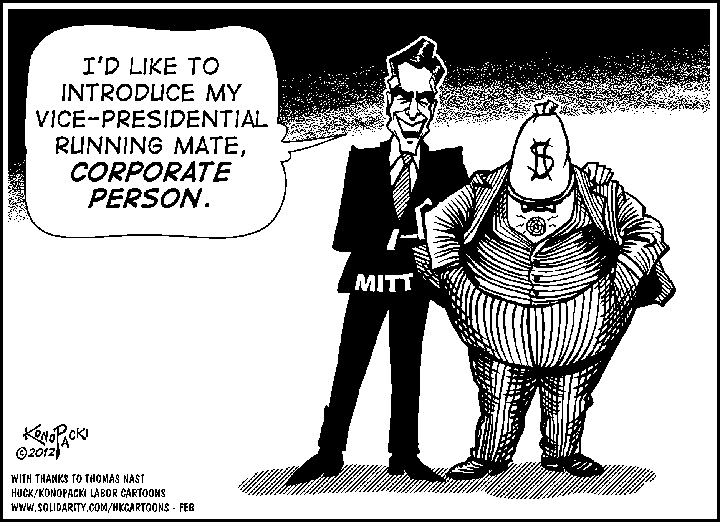
The St. Paul City Council will consider a labor-backed resolution opposing corporate personhood at its meeting Wednesday, June 13.

Council Member Dave Thune, who authored the resolution, said he expects it to pass. Organizers with the Move to Amend coalition in St. Paul are planning a rally and press conference at 3:40 – 10 minutes after the Council is scheduled to vote on the resolution – in the City Hall lobby.

Pushing cities like St. Paul to pass resolutions is the present organizing strategy employed by Move to Amend, a nationwide organization working to pass a constitutional amendment declaring that inalienable rights belong to human beings only.

Thune modeled his resolution after a similar measure passed by the Duluth City Council in December. Duluth was the first Minnesota city to pass such a resolution, sparking similar resolution drives in cities across the state.

If passed, Thune said, St. Paul’s resolution will “show a groundswell of people care about this and are concerned about it. It’s both a message to decision makers in Washington, but also – and probably most importantly – meant to keep the discussion and the outrage alive at the grassroots level.”

Outrage surrounding corporate personhood exploded with the U.S. Supreme Court’s 2010 Citizens United decision, which struck down campaign-finance laws restricting the ability of corporations – and unions – to spend money to influence elections, candidate selection and policy decisions.

“When that ruling came down it just shook people’s belief and trust in the government,” Thune said. “It turned the reigns over to unelected decision makers making decisions based on how much money was available. It’s just wrong.”

Although Citizens United expanded their ability to spend money to influence elections, unions have criticized the decision loudly from the day it was handed down, and several union groups have backed the Move to Amend campaign.

The St. Paul Regional Labor Federation, AFL-CIO, passed a resolution against corporate personhood in September 2011. The organization is urging members to turn out for the City Council vote on Wednesday.

Thune also urged citizens to attend the vote and the rally afterward.

“It’s pretty well established that cities are the bottom line of government,” Thune said. “We’re showing that at the level of government closest to the people, we are fed up with this thing. We the people are making a statement.”

For more information on the Move to Amend campaign’s work in St. Paul, e-mail minnesota.move.to.amend@gmail.com.

Letter Carriers collect 300,000 pounds of food for Second Harvest

Volunteers at the Sun Ray Cub Foods distribution site included members of ATU Local 1005, Second Harvest staff and Boy Scouts from Woodbury.

St. Paul Letter carriers collected more than 300,000 pounds of non-perishable food items May 12 during their union’s annual Stamp Out Hunger food drive. The estimated total is a slight improvement over last year’s total – and a big boost for emergency food shelves maintained by Second Harvest Heartland in the East Metro area.

Branch 28 retiree Frank Garhofer (right) helps letter carrier Rich Franklin unload a mail truck filled with donated food.

The total reflects donations collected in St. Paul and the eastern suburbs by members of Branch 28 of the National Association of Letter Carriers, which sponsors the food drive nationwide.

Perry Schmidt, a letter carrier who helps coordinate the food drive for Branch 28, said the estimate is “almost the same as what we collected last year,” but is likely to grow when cash donations, still trickling in to the union offices, are converted into poundage and included in the total.

This year’s food drive, Schmidt added, benefitted from warm, sunny weather and an expanding network of community volunteers, who helped letter carriers transfer donations from mail trucks to semi-trailers at distribution sites across the Twin Cities.

“It probably went off as good as it’s ever gone off,” Schmidt said. “Every year it gets better. You don’t even have to ask for volunteers anymore. The word is out, and there’s just a lot of people who want to do it.”

In its 20th consecutive year, Stamp Out Hunger is the nation’s largest one-day food drive.

More Than A Memoir: Acuff’s new book defends the ‘absolute necessity’ of organizing

Stewart Acuff is the author of the new book “Playing Bigger Than You Are: A Life in Organizing.”

In his new book, “Playing Bigger Than You Are: A Life in Organizing,” Stewart Acuff looks back on his 35-year career as a community, political and union organizer, including a stint as organizing director of the nation’s largest labor federation, the AFL-CIO, from 2001 to 2008. Acuff is quick to point out, however, that the book is more than a memoir. It is also a call to arms and a defense of organizing as an “absolute necessity” to the survival of the nation’s labor and progressive movements.

Acuff, who now serves as chief of staff for the Utility Workers Union, is in Minnesota this week promoting his book. He will appear at Common Good Books in St. Paul at 7 p.m. Wednesday, along with local authors Jack Nelson-Pallmayer and Joanne Boyer.

Acuff spoke yesterday with The Union Advocate from Duluth, where he was scheduled to give a reading at the Paul Wellstone Hall. Here are selected excerpts from our interview.

Union Advocate: You’re in Minnesota to promote your new book, a memoir of your career as a community and labor organizer. What lessons or knowledge are you hoping readers gain from your personal story?

Stewart Acuff: Some people describe it (as a memoir), but there’s nothing personal in it. It’s mainly about campaign struggles, fights I’ve been in over the last 35 years… Each chapter is a different struggle and fight and what we did to win. I don’t think I put any losses in it (laughing).

There’s a very interesting chapter on the huge fight we had to unionize the 1996 Atlanta Olympics, which we won. It was actually labor’s biggest victory in the South. There’s a big chapter on my time as a United Nations election observer in Sierra Leone … and how I almost got killed there. There’s a chapter on non-violent civil disobedience, and there’s a chapter on politics… There’s a chapter on strikes. There’s a kind of “do’s and don’ts” for organizers …

It’s getting good reviews. People like it. I also have a website, stewartacuff.com, which is just chock full of poetry I’ve been writing a lot of lately.

UA: I didn’t know you wrote poetry.

SA: I don’t do it regularly. I’m in a spate of it right now. Some writer once said, ‘If you want to write, write everything,’ so I’ve been doing a little free verse poetry for this year and last year… There’s some more personal stuff in there… I’m less careful with it than I was with the books, more expressive. And I will read a little bit of poetry (at Common Good Books).

Acuff’s new book is available on Minneapolis-based Levins Publishing.

UA: Who is your target audience with this book, and what are you trying to tell them?

SA: It’s all progressives. The point is basically, there’s two kinds of power… There’s the power of organized money, which is ruining our country right now. And there’s the power of organized people. And we have got to organize people right now. There’s more of us than there is of them, which the Occupy Movement has re-taught us. If we’re organizing, we can make this a much more just and fair country and society, with prosperity for all.

UA: Why write this book at this point in time?

I was sort of at a good point to look back. I wrote my first book (“Getting America Back to Work,” with University of Minnesota economist Richard Levins), and then I thought, this is a good time to sort of define my career and try to teach my lessons and maybe inspire some young organizers, I hope, and talk to progressives in the country about the absolute necessity of organizing…

There’s probably more truth written in this book about the (AFL-CIO and Change to Win) split than has ever been written before, too. I managed the split for the AFL-CIO, the politics of it and the media of it. I thought this is a time that makes sense to draw some lessons and to talk about it… I’ve been blessed to be in the right place at the right time to watch history. This was probably the right place and the right time to record some of it.

UA: Any highlights from the split that will surprise people or pique people’s interest?

SA: One of the hardest things about the split was that it occurred at the AFL-CIO convention. I was running the floor of the convention, and I had to accept and sign for the letters of disaffiliation from my union, SEIU, and the Teamsters.

One of the unfortunate things about the split, besides the fact that it weakened us, was that it dominated labor news, and it was absolutely the wrong thing for union members and the general public to be talking about – the byzantine, arcane world inside labor. I blame myself every day that I didn’t turn more of those debates and more of those interviews into a discussion about why the labor movement is needed now more than ever and how to rebuild it, instead of just arguing about our inside business.

UA: It’s clear that writing this book required a lot of self-reflection. How difficult was that process?

SA: It was at times a painful process. I’m 57, so I’m obviously closer to 60 than I am to 50, and it’s kind of a reminder that you don’t have that much longer. So it was a very interesting process to write, and it brought back tons of memories, most of them good, some of them not.

UA: You’ve worked at all levels of the labor movement, from local unions to the national AFL-CIO. From your standpoint, is the union movement as committed to organizing workers as it needs to be in order to survive?

SA: No, we’re not. We’re not as committed to organizing as we need to be. And that’s been a struggle for a long time. I spent 10 years working on that, and in two of those 10 years we had the greatest growth we’ve had in a generation. We know we can organize, but it’s damn hard – and it’s really damn hard in a recession.

As the organizing director, I was more concerned with systemic change that would allow workers to organize without as much retaliation and interference from the boss… It’s not enough to win one campaign at a time. We’ve got to change the terrain, we’ve got to change the climate, we’ve got to change the playing field. What stopped us (from passing the Employee Free Choice Act), frankly, were the deaths of Ted Kennedy and Robert Byrd… We just couldn’t get them to the Senate floor at the same time. I’ve lost a lot of sleep over that.

Union volunteers take center stage at Labor 2012 kickoff event

Terri Buttleman of SEIU Local 284 urges union members to get involved in the Labor 2012 political campaign. “Let’s roll up our sleeves and get to work,” she said.

Regional labor federations from both sides of the Mississippi River fêted their union volunteers yesterday, hosting a barbecue at the Operating Engineers Hall in Minneapolis to thank activists for helping stave off a flood of attacks on workers during the 2012 legislative session.

The event also kicked off the Labor 2012 political campaign in the Twin Cities, as union volunteers received a preemptive “thank you” for the work they will do to get out the vote for labor-endorsed candidates in November.

The St. Paul and Minneapolis Regional Labor Federations, in partnership with the Minnesota AFL-CIO, are set to ramp up their political campaign this summer, and it was clear from the speeches union leaders made yesterday that electing a pro-worker majority in the Legislature is their top priority.

“We get to choose who is going to be (at the Capitol) for the next two years,” said Steve Hunter, secretary-treasurer of the Minnesota AFL-CIO. “We need each and every one of us who’s in this room, and we need about 100 more for every one of us in this room. We’ve got to turn our people out to vote.”

If they succeed in electing pro-labor majorities to the Minnesota House and Senate, the state’s union members can be assured that right-wing attacks on workers won’t resurface in 2013. That includes reckless “Right to Work” legislation, which would weaken unions by forcing them to represent workers who don’t pay dues.

Last winter Republican majorities in the Legislature attempted to put RTW on the November ballot as a constitutional amendment. In response, unions rolled out an aggressive grassroots campaign that included member-to-member phone banks, door knocks and rallies at the Capitol.

“You made the calls. You attended the rallies. You were at the Capitol,” said Bill McCarthy, president of the Minneapolis Regional Labor Federation. “All of these things led to victories.”

The St. Paul and Minneapolis labor federations also set out to educate the public about the threat RTW poses to workers and their unions. With the help of workers released by their local unions to work on the RTW campaign, the federations hosted 120 briefings on RTW across the Twin Cities area.

Harry Melander, president of the Minnesota Building and Construction Trades Council, thanks union members for their work to keep “Right to Work” off the 2012 ballot. “You are the people that made this thing go away,” he said. “Not forever, but you made it go away this year.”

Amalgamated Transit Union Local 1005 released four workers to the RTW campaign. Local 1005 President Michelle Sommers said her members understand “that in order to keep what we have, we have to find a way to work together. We need to move forward, and we cannot move forward as long as we’re spending all of our time and money on fighting the attacks. We have to become proactive.”

RTW wasn’t the only attack on workers offered by Republican majorities, of course. The list of targets also includes teachers’ tenure rules, nurses’ professional standards and construction workers’ prevailing wages.

St. Paul Regional Labor Federation President Bobby Kasper compared the 2012 session to a 15-round fight, which unions managed to win by judges’ decision.

“Do you know what the knockout punch is?” Kasper asked. “We need to take both the House and the Senate back so we can help Superman, our governor, Mark Dayton.”

The governor’s chief of staff, Tina Smith, received a standing ovation for the work Dayton’s administration did to fend off – often by veto – Republican attacks. While the governor, a former hockey goalie, has become adept at playing defense during his tenure in office, he would prefer to play some offense next year, Smith said.

“He cannot do that without Democratic, DFL majorities in the House and the Senate,” Smith said. “We need everybody’s help.”

Click to view a gallery of photos from the Labor 2012 campaign kickoff.